

I recently jumped on Palisades Gold Radio with Stijn for a chat, with one topic being the opportunity I see in high shareholder yields (dividends, buybacks, and debt pay-down).
My theory is that at a certain shareholder yield (usually after brutal multiple compression), active managers will risk leaving their bunkers, as the pitch is fat enough for them to stand a chance when fighting the machine…
One more terminator meme while I’m at it.

Here are a few examples; yes, the charts and earnings aren’t pretty, but that’s where the opportunity lies. These set-ups fall into two buckets: either the outlook for the business/industry is really grim, or it’s viewed as a temporary pop (i.e., a commodity spike or one-off asset sales, etc.).
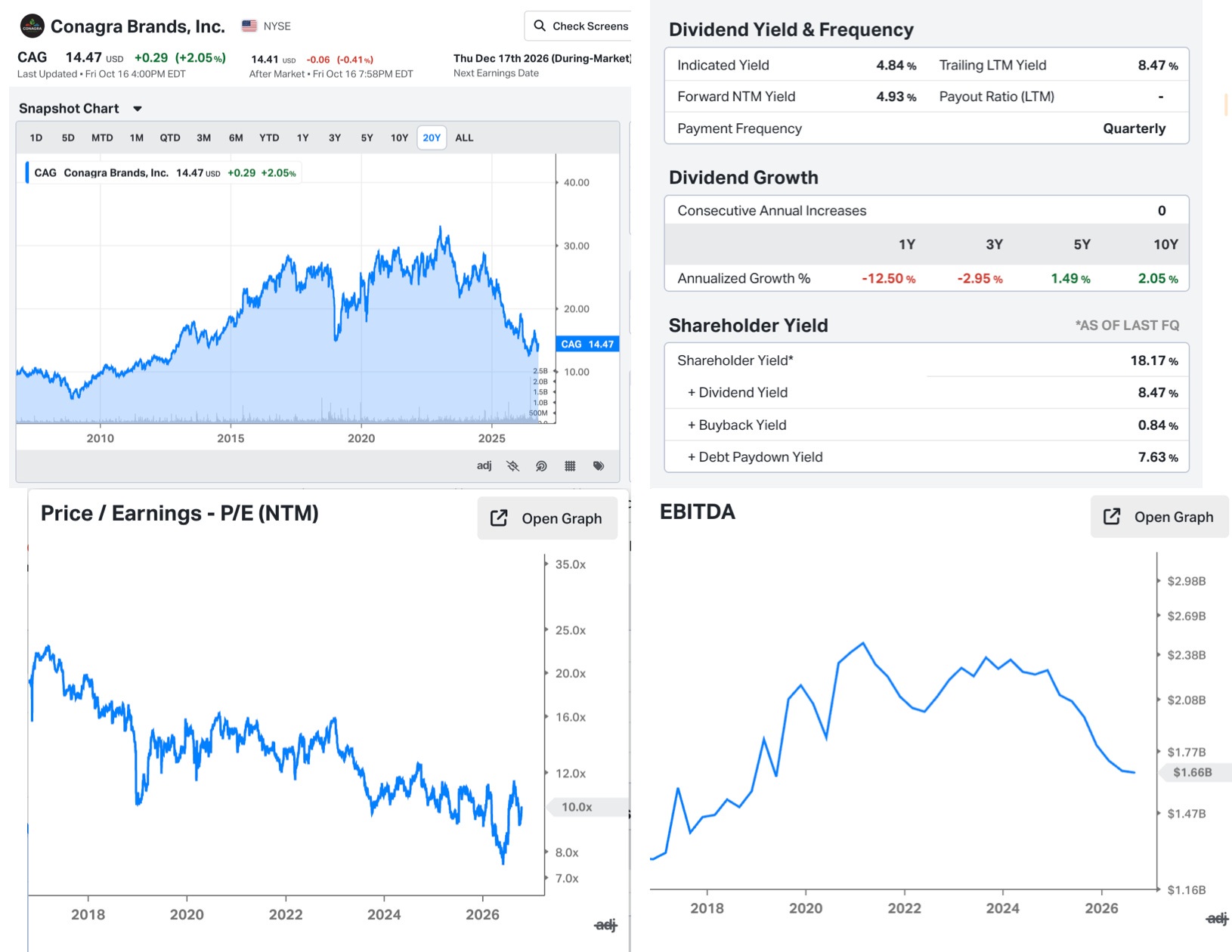
Conagra falls into the former: its earnings trajectory has been grim, combined with the fact it’s likely become a funding source for AI (along with a whole lot of other sectors!)
Yes, the above shareholder yield is just the past quarter, which is why I like to pull up 5-year history to get an idea of the actual trajectory, not just one quarter that can be distorted by a jump in debt repayment or a special dividend, etc.
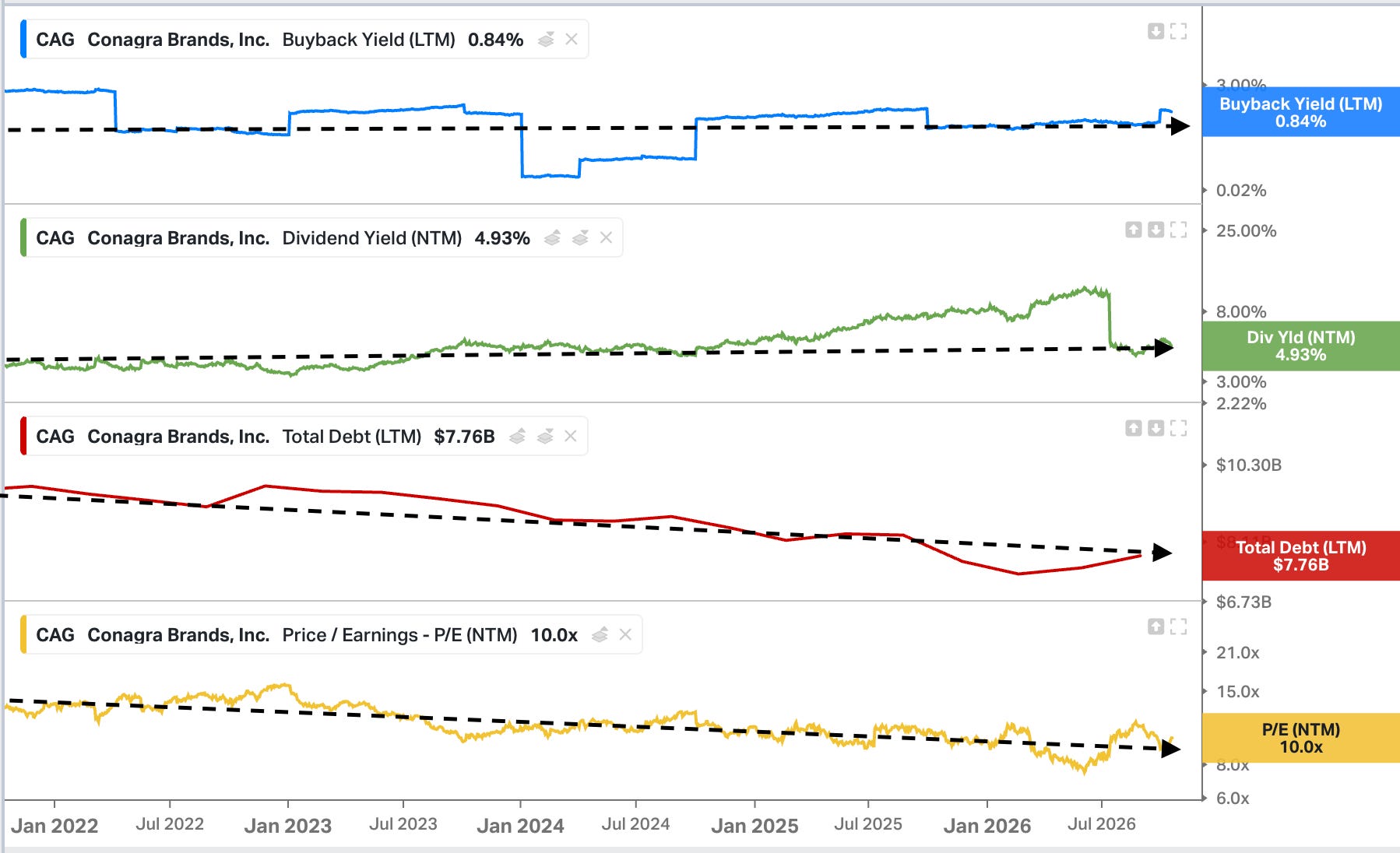
Koninklijke Ahold Delhaize N.V.
Ahold is another consumer staple now pushing toward ~20%, and what’s interesting is earnings are holding up surprisingly well, with the recent share-price damage largely due to multiple compression.
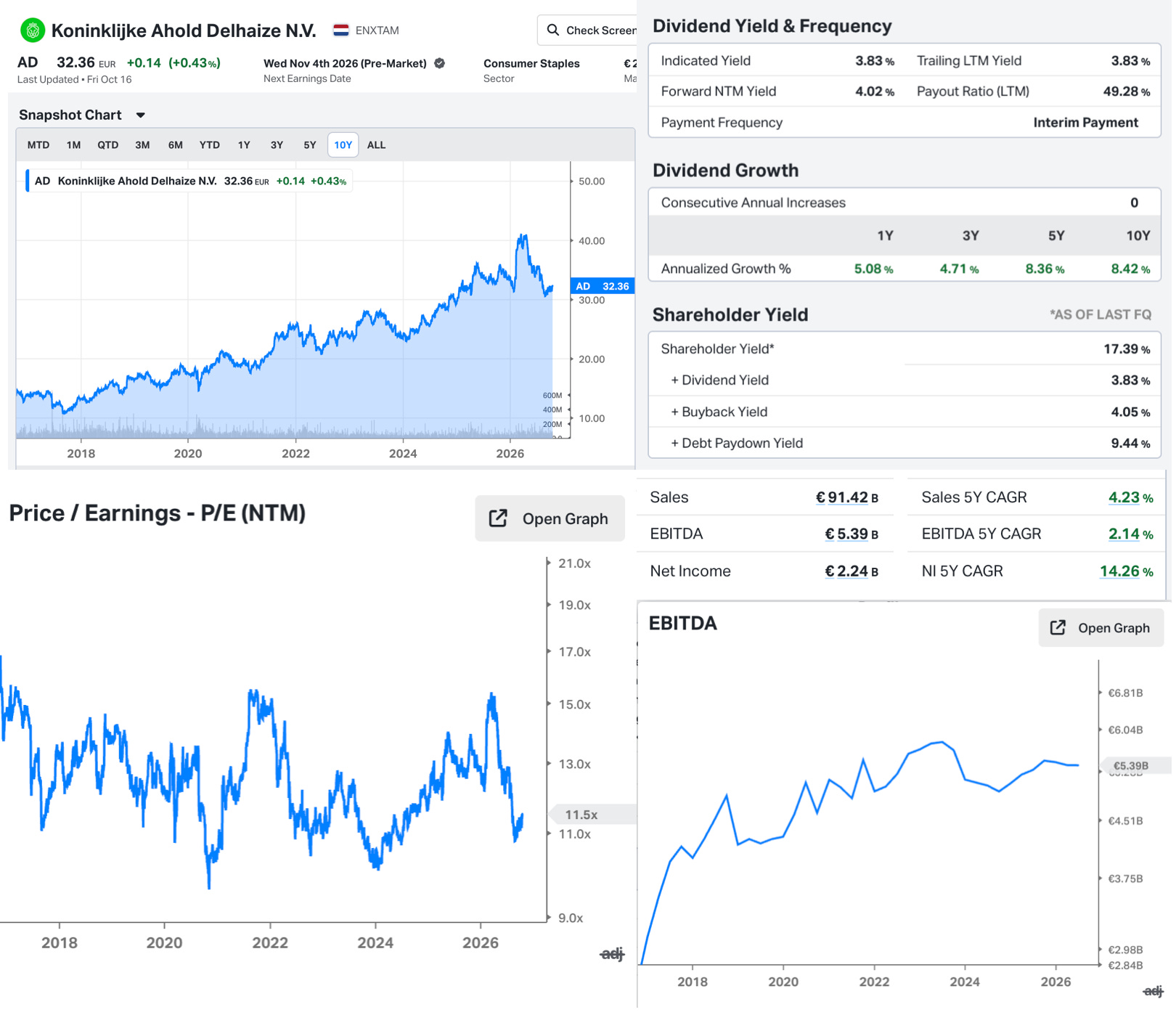
This multiple compression, combined with a solid buyback, has my attention, as buybacks are hugely accretive when they clean up shares at a historically low valuation.
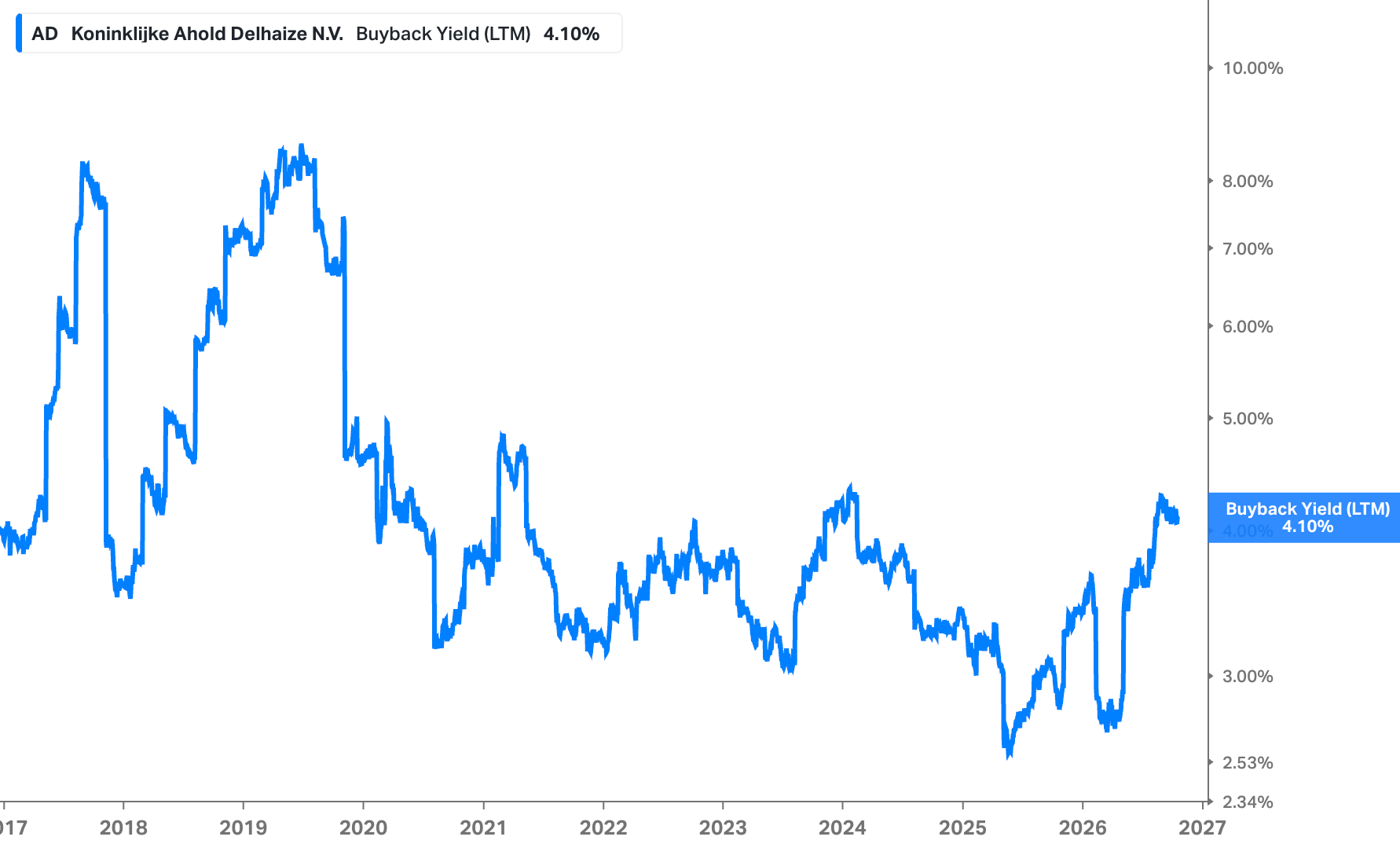
I’ve been playing around with a strategy to leverage this with super long-dated options on the Amsterdam/Eurex exchanges. The issue is liquidity (after sitting on limit orders in AD for 1-2 months, I’ve got filled on a tiny fraction of the position size I’m after, so it’s great in theory but not implementable in practice).
Shell Plc
The position that’s got me digging into all of this is Shell, which is now a large position in both my asymmetric portfolio (Dec2030 options) and Hugo’s portfolio (equity).
Analysts’ consensus (below) on Shell was a “temporary energy spike” which would revert within a quarter or two.
I’ve taken the other side of this view in size.
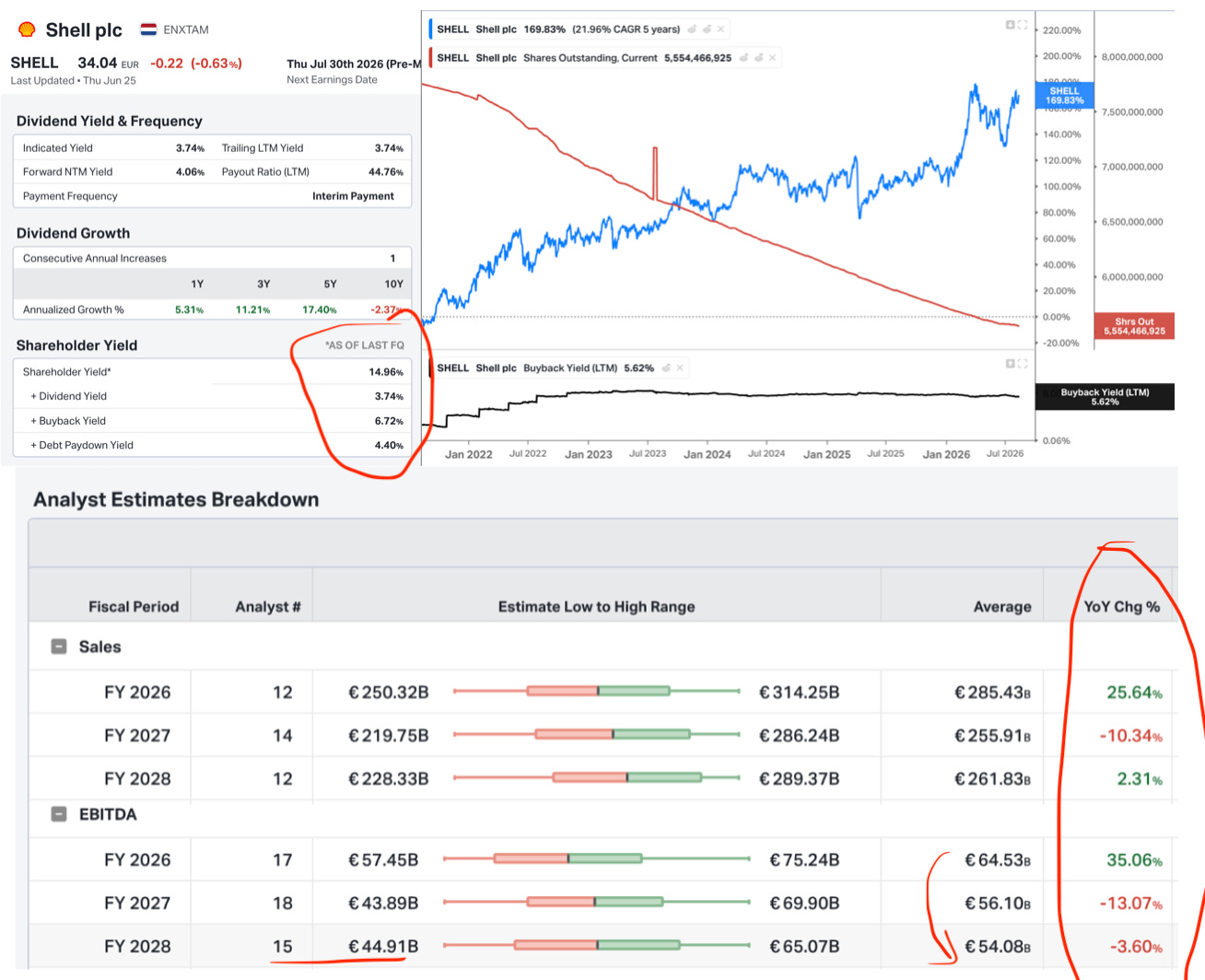
Multi-baggers occur when you can nab a 2.8x before the average analyst can even get their pants on. The beauty of these trades is that the buyback steadily pushes me further in the money over time.
Time is on my side: the trade is ~4 months into the 54 months I have expiry (Dec20, 2030), while analysts are getting team-rolled (see today’s analyst estimates below).
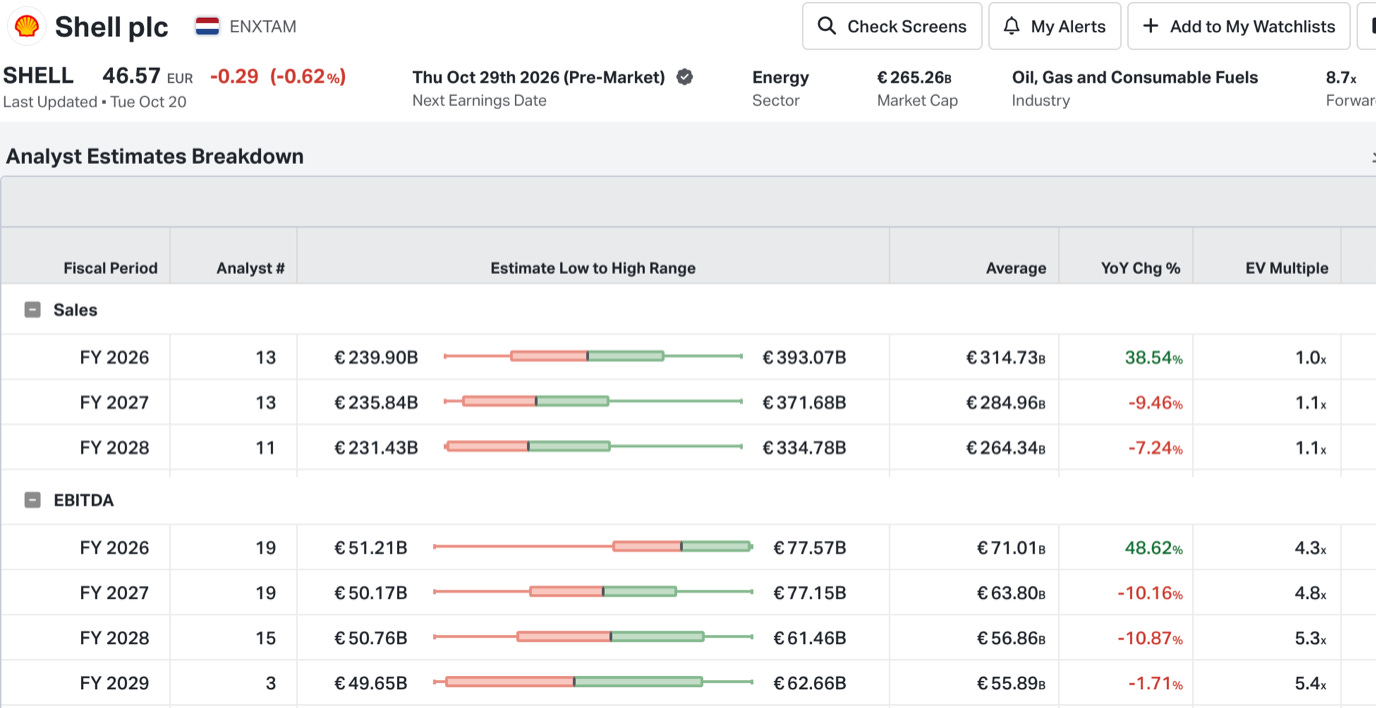
The market has woken up to the realisation there is no end in sight for the conflict, as per the WTI calendar 2027.
What hasn’t got the same coverage is LNG (TTF & JKM) January 2028 futures (mid EU winter) going vertical since August (it’s going to drag thermal up with it).
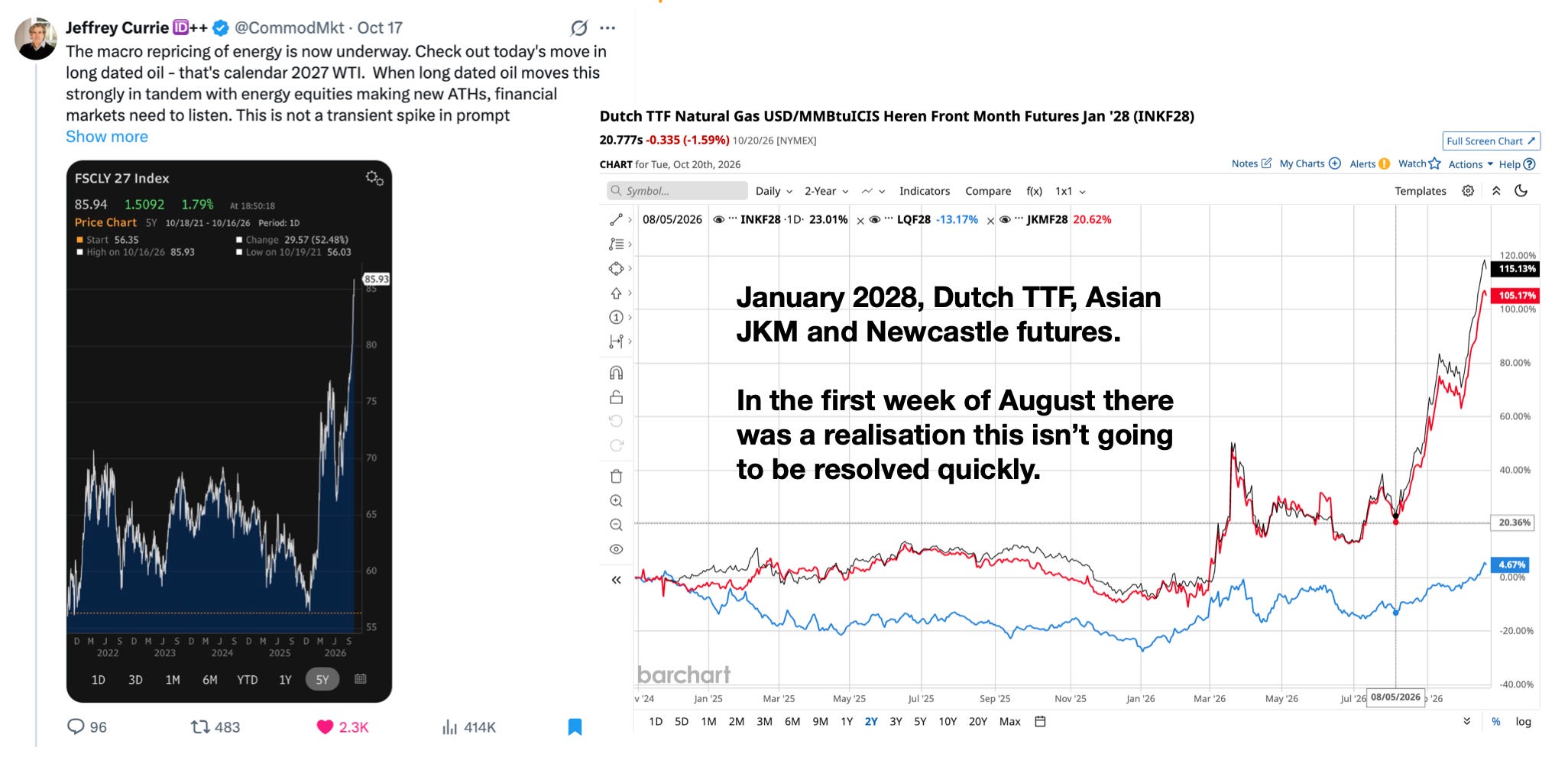
I’m not doing anything new with this, as I’m already maxed out on my energy position sizing and now want to dig into a new unfolding situation…
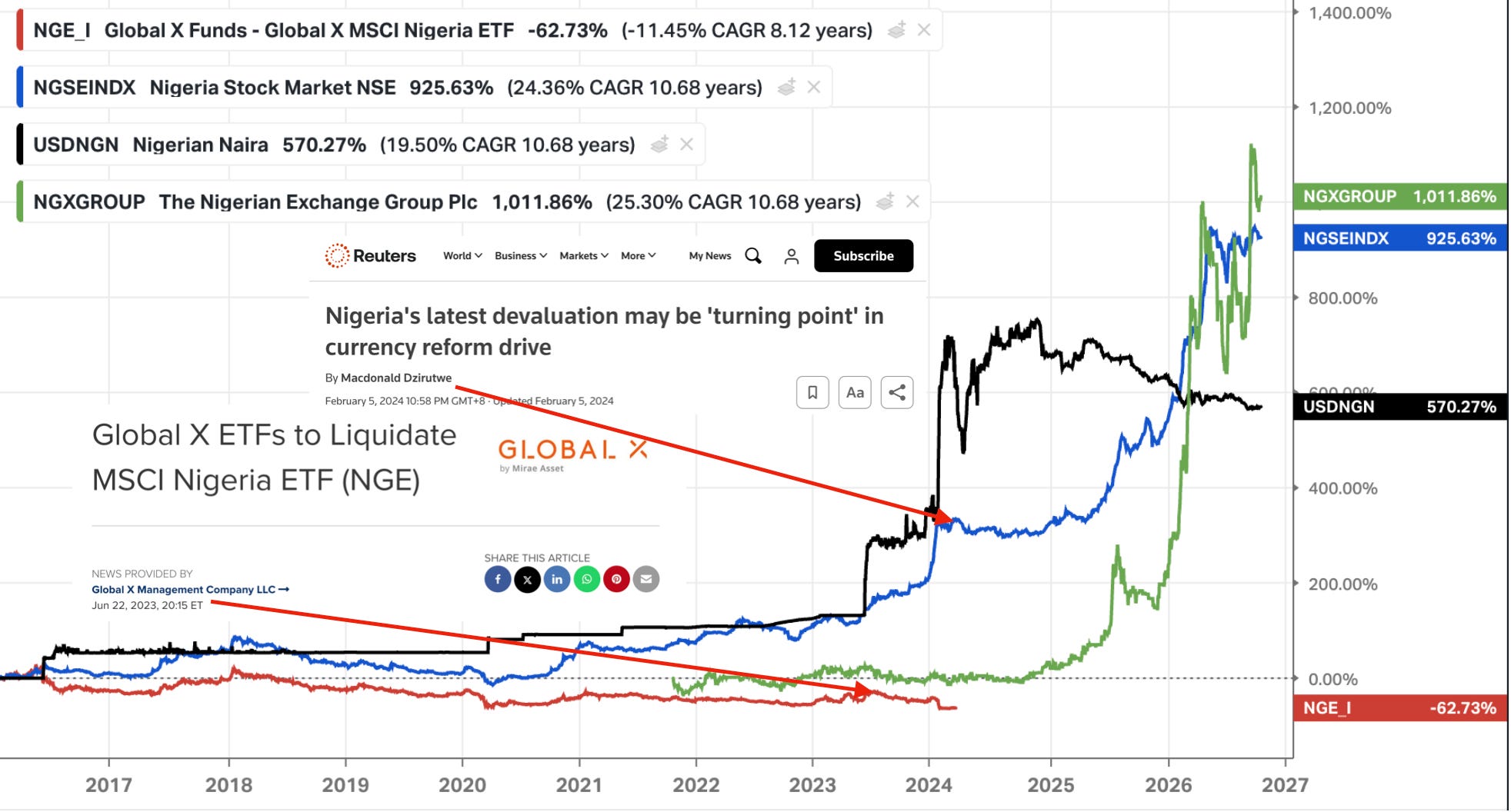
Those that have followed my work know I put a lot of weight on remaining ETFs being closed/liquidated as a sign of sentiment bottoming and investor capitulation.
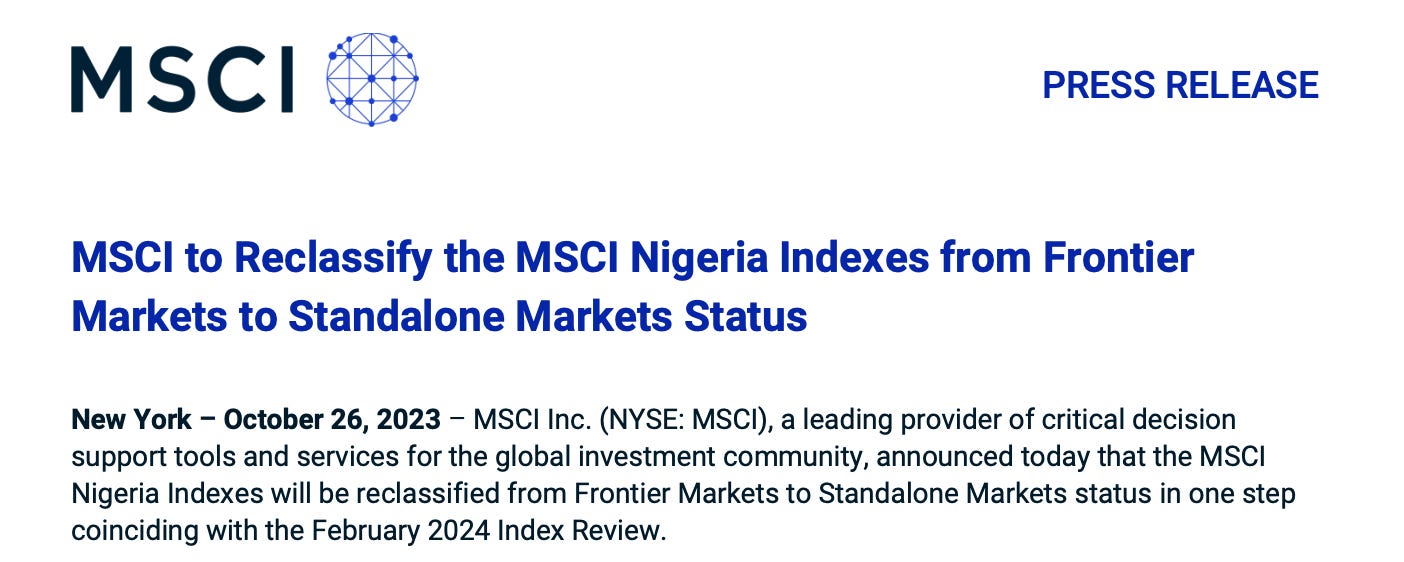
An interesting case study is Nigeria, where MSCI reclassified it as a Standalone Market in October 2023.
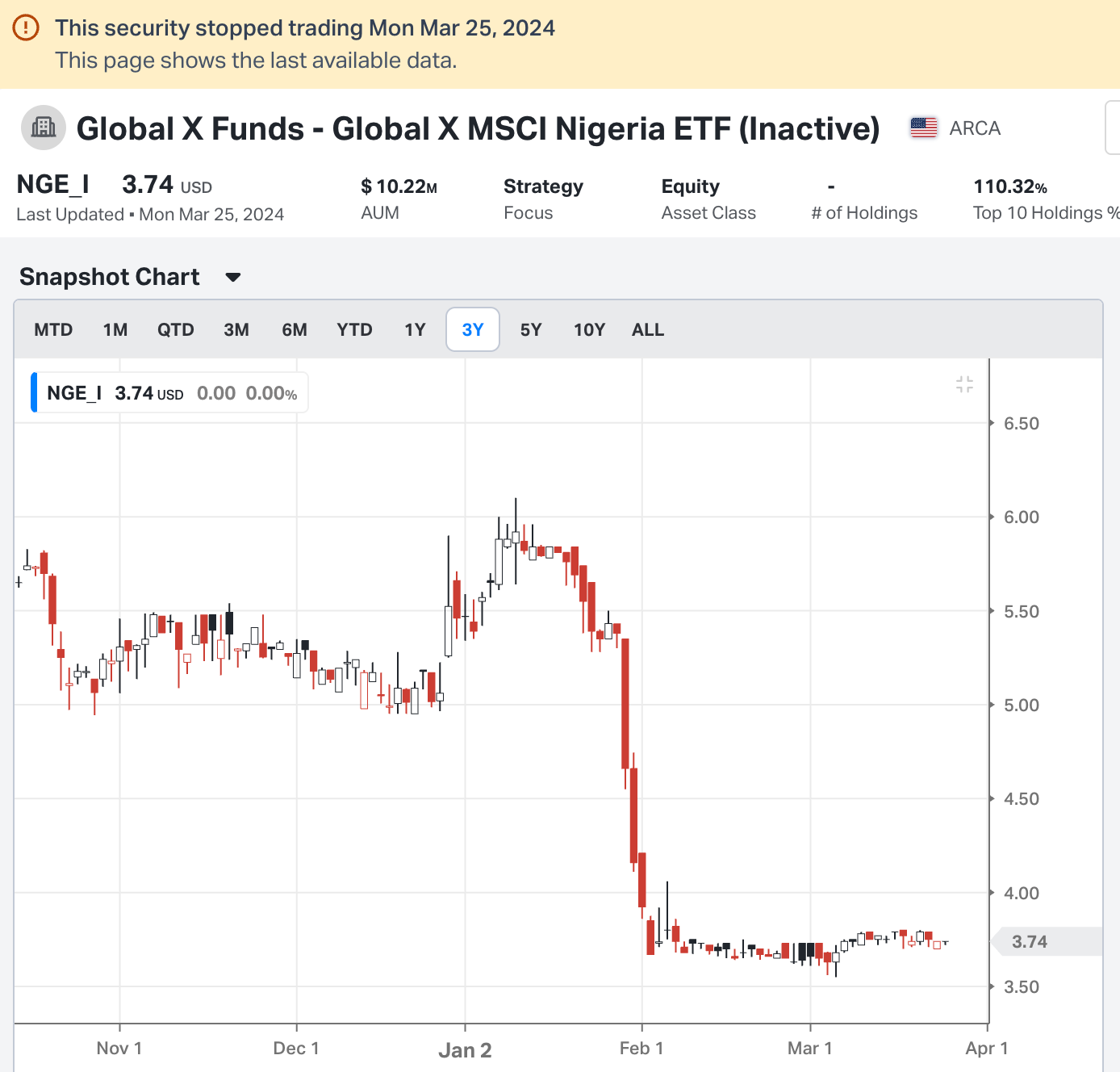
This was then followed by Global X MSCI Nigeria ETF ceasing to trade on March 25, 2024, which reminds me of KOL delisting in Dec2020.
The rest is history: the exchange (and exchange operator) being serious multibaggers in USD, given the reform and devaluation, was the real starting gun.
Why has my attention now?
We have a similar situation playing out in Indonesia (without the currency controls to complicate things).
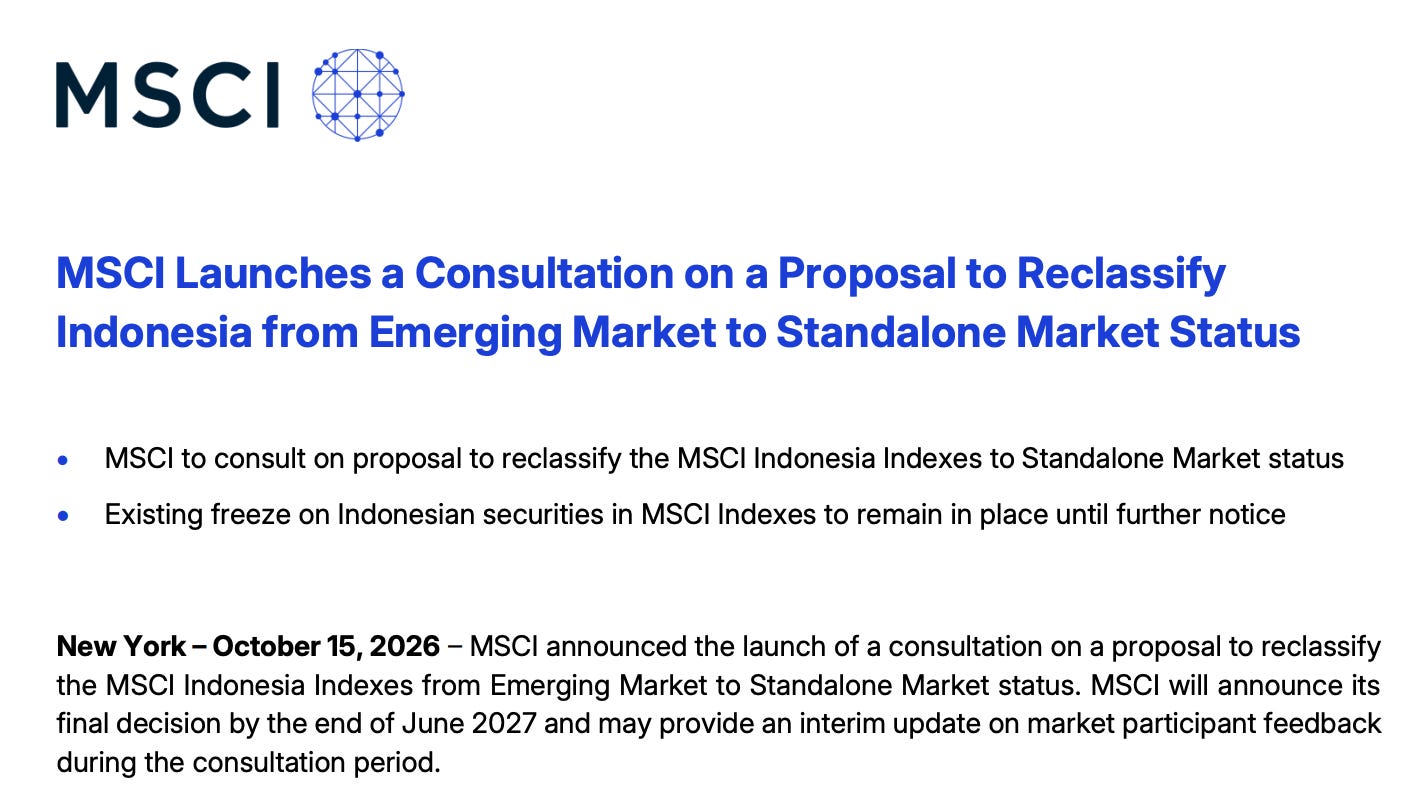
Yes, the BIG difference to Nigeria is that this is currently a warning shot over the bow, with the real event being the final decision by the end of June 2027. So it is somewhat binary: can Indonesia sort out their shit to MSCI’s satisfaction by this date? Fines have been announced but its far from certain if it will be enough.
The question becomes: when is the margin of safety fat enough that I can underwrite that downgrade occurring in 2027 and further currency downside?
Maybe I’m too close to everything in Indonesia to be objective; having just gone through a fuel shortage in Bali, I’m bearish on what I’m seeing play out in Indonesia right now. Prabowo has yet to retreat from his flagship free-meals programme, which is 5.7% of total state spending in 2026. Fuel subsidies are pushing them deeper into the hole, with the budget assuming $70 oil in 2026 and $75 in 2027.
Let’s run through a few names…
PT Unilever Indonesia Tbk
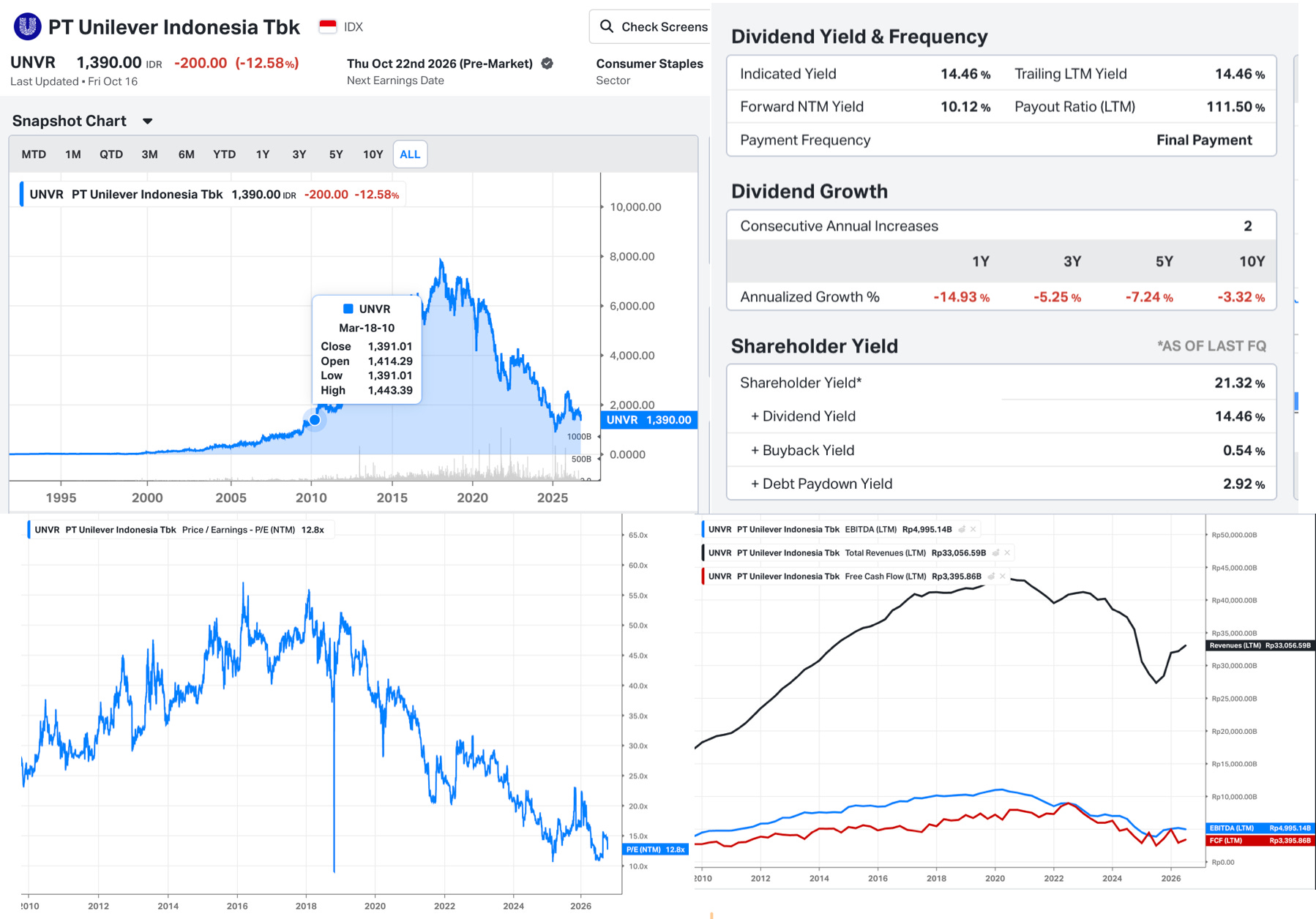
Unilever Indonesia is the second largest consumer-staples name on the Jakarta exchange. It has been having a rough time since 2018 and was losing market share to local competitors up until recently.
The bull case is it’s a turnaround story after years of losing market share due to boycotts and margin pressure. New management launched a business reset that has gained traction and boosted earnings over the last year or so. Not that the market is taking much notice of this, as you can see; the smashing continues, pushing it back to 2010 levels. At 21% shareholder yield (last FQ), it’s interesting: how much cheaper can the market let it get? 10x forward PE? 25% shareholder yield?
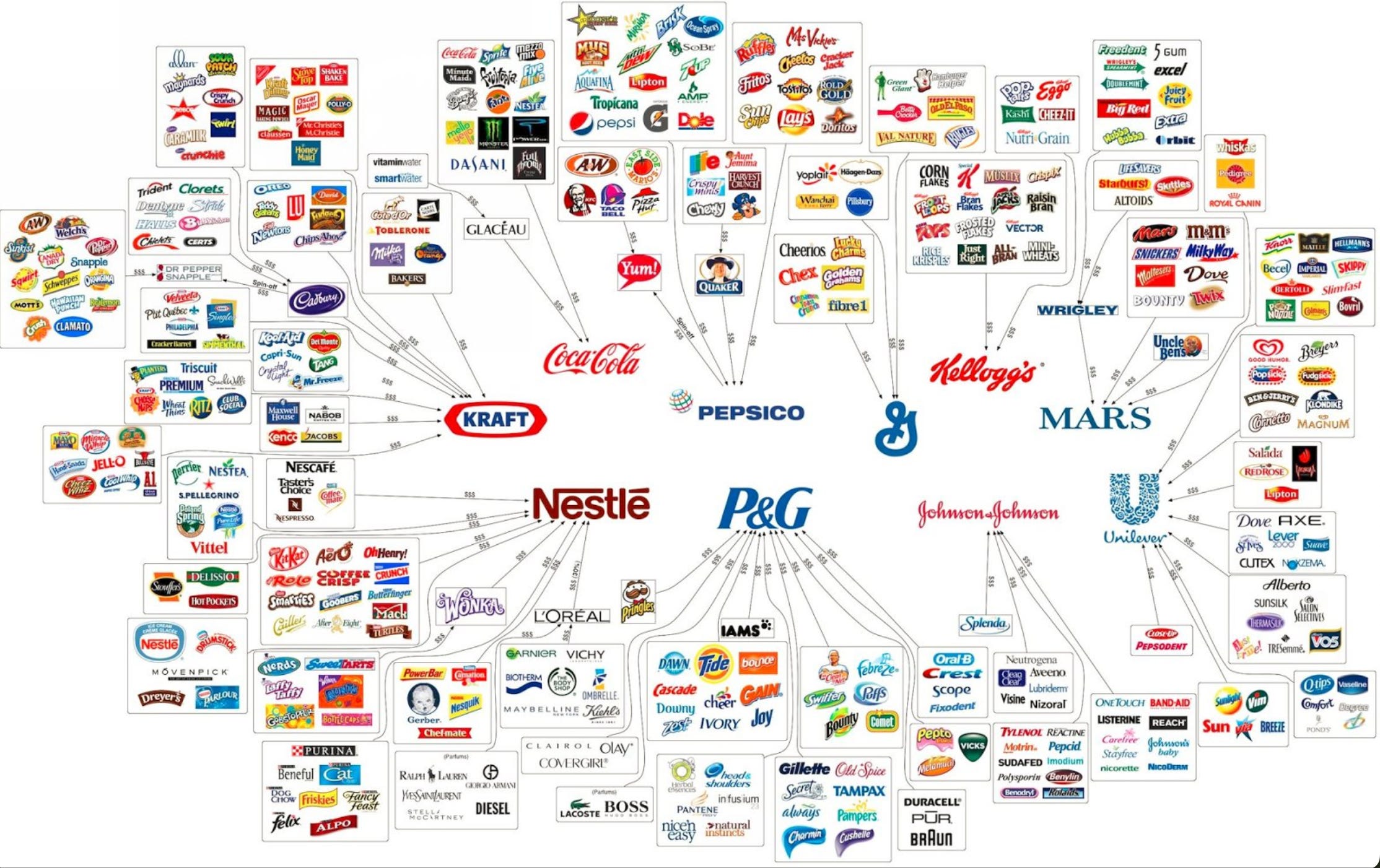
For anyone unfamiliar with Unilever’s brand portfolio.
These are the highest-shareholder-yield companies my scanner pulled up (and how I’m now able to access Indonesian equities).