

Recapping my recent thermal coal and LNG pieces and where they stand now.
EU’s steady erosion of resiliency
One F#ck-Up After Another (Optimising for efficiency over resiliency, until something breaks...)
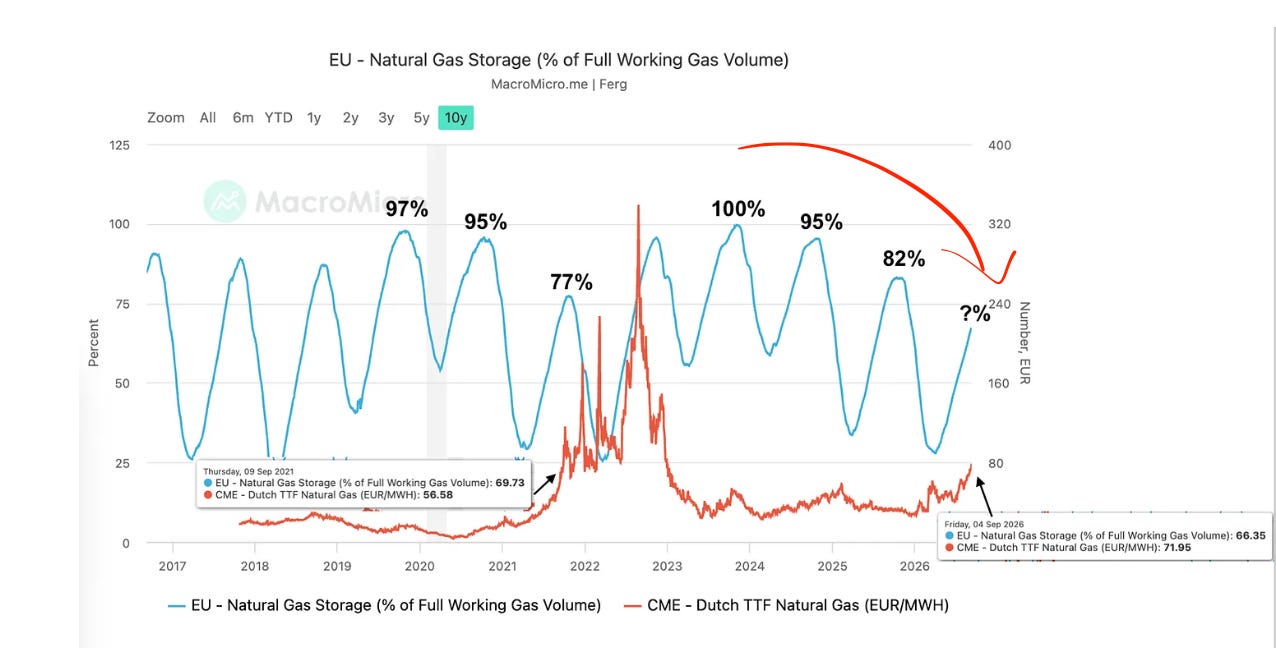
Advancing One Crisis at a Time (Positioning for the coming LNG bidding war.)

Some deep foresight from the IEA.

Or via meme.
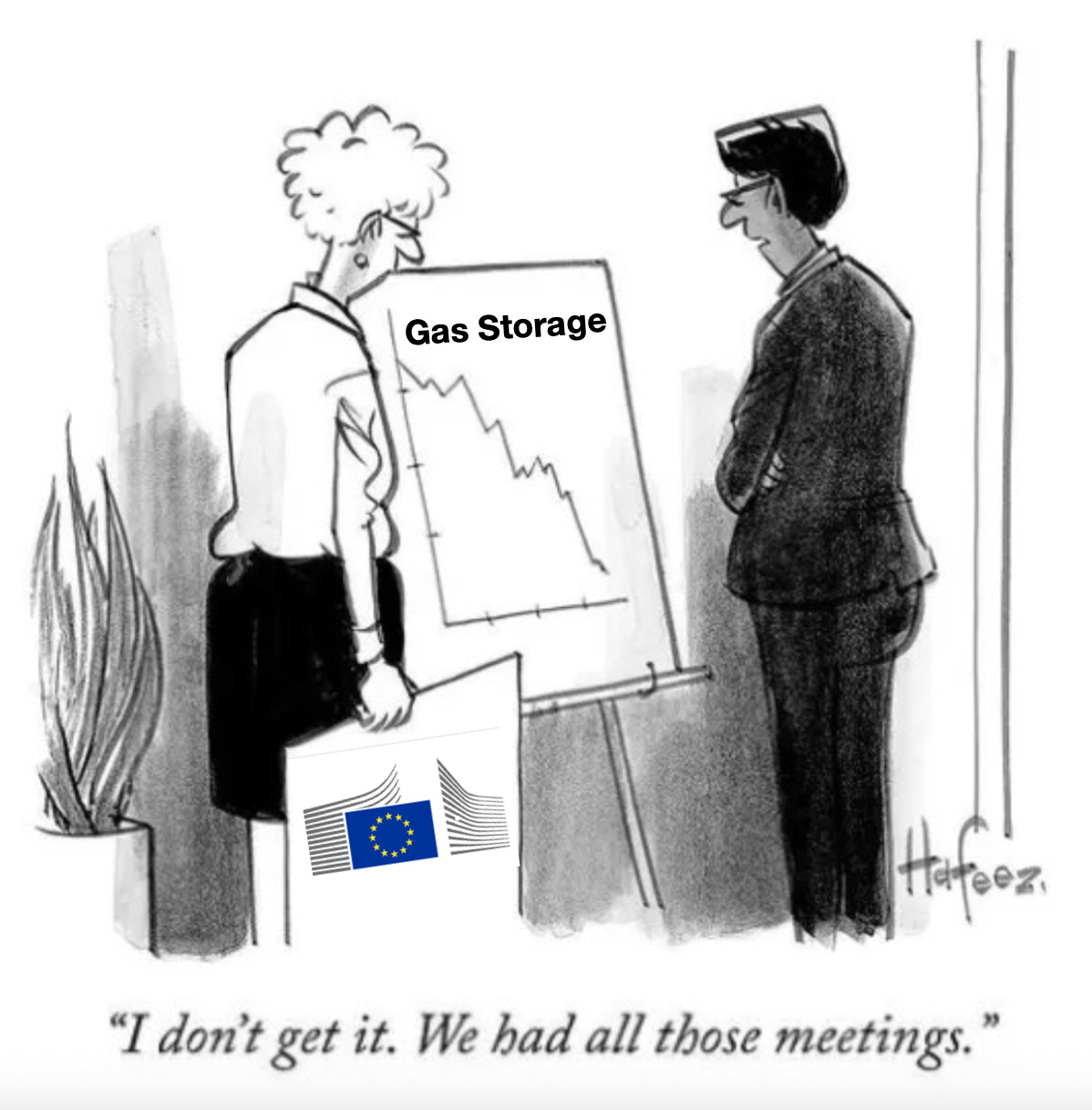
Solidarity, Until the Music Stops
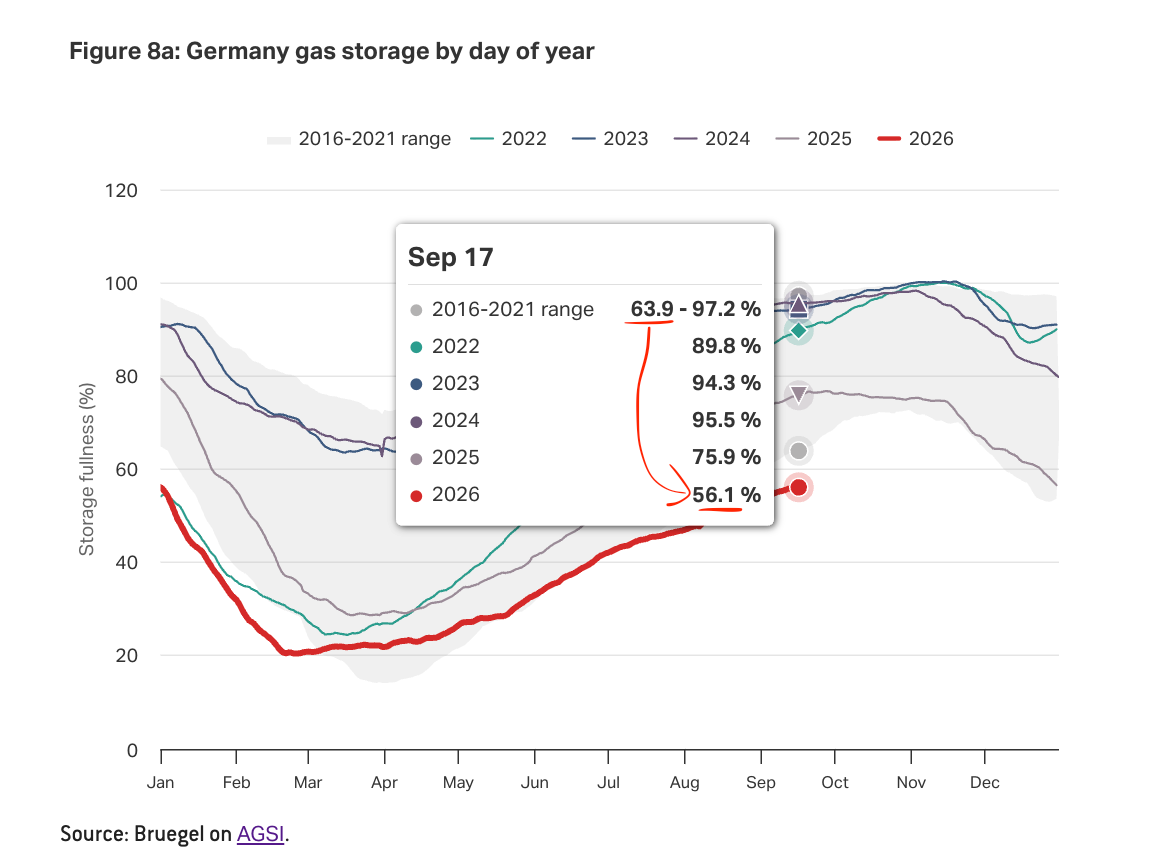
Germany is the one to watch, as it’s Europe’s largest gas storage hub, accounts for 25% of EU gas consumption, and is currently in uncharted territory for gas storage.
With the interconnected nature of EU energy, there can be no isolated crisis: take the example below, with €936 per megawatt-hour being 10x the annual average.
On December 12 2024, the average daily price in Germany rose to €395 per MWh, and during peak hours to €936. At the same time, in the Netherlands during peak hours, the wholesale price of electricity reached €872 per MWh, in Denmark €936, in Norway €898, in Belgium €565, and in Austria €850.
-Germany has been blown outIn November and December 2024, during “dunkelflaute” periods, the wholesale prices on the electricity exchange were exceptionally high several times. For the hour from 5pm to 6pm on Thursday, 12 December 2024, a maximum price of €936 per megawatt hour was traded on the day-ahead market.
-Bundesnetzagentur Study of electricity price peaks completed
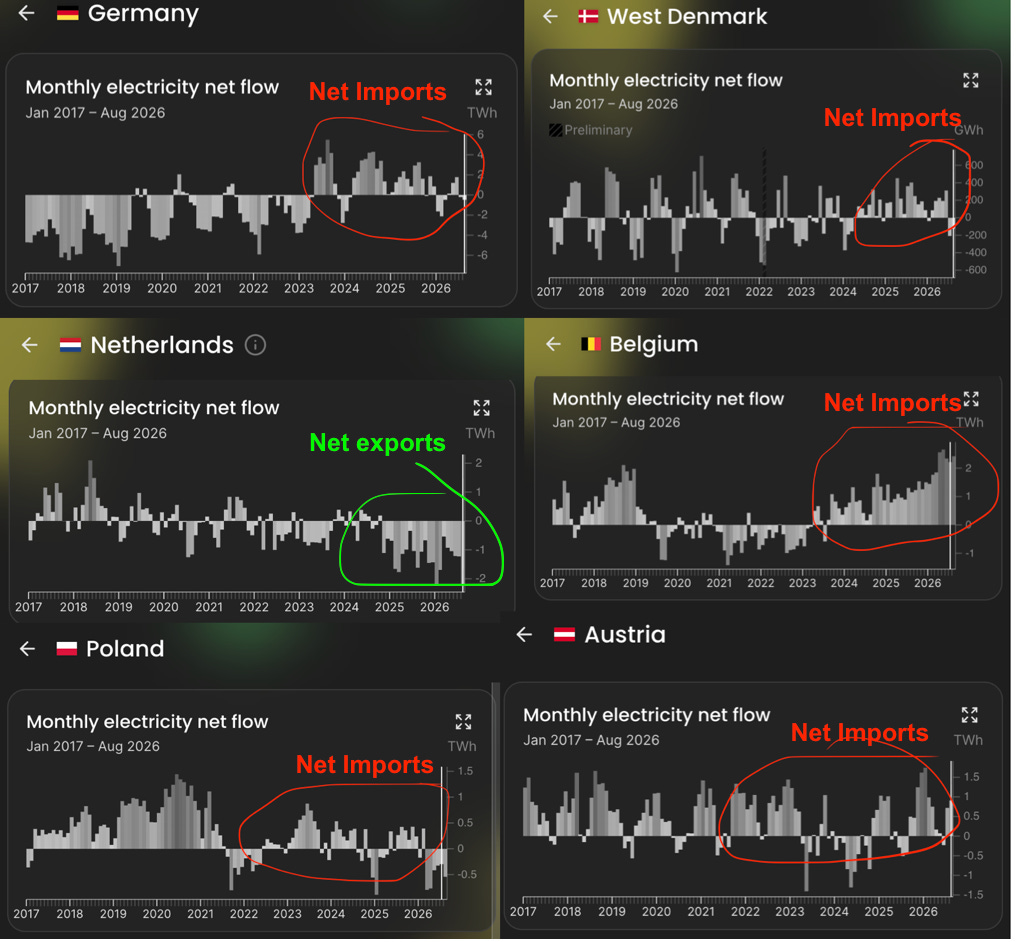
Germany has signed just two bilateral solidarity agreements with Denmark and Austria (Belgium, the Netherlands, and Poland refused to negotiate them). None of this really matters when you look at net electricity flows with these countries, as they are all net importers (bar the Netherlands, which is facing its own gas storage problems).
Refill Rates
OSLO, Sept 8 (Reuters) - German gas storage sites can reach 77% full at best by a November 1 target, but this would still mean shortages if this winter is extremely cold, Germany’s gas storage industry association INES said on Tuesday.
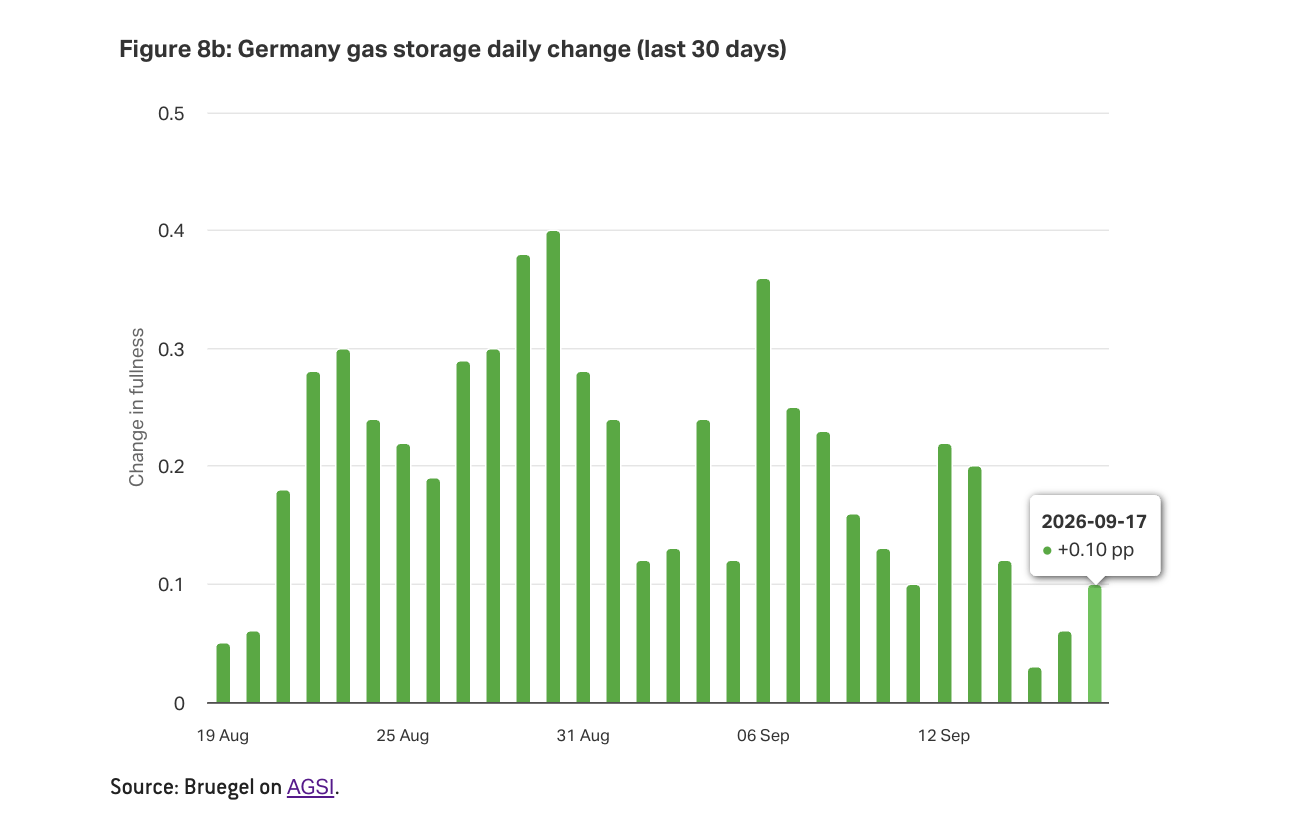
“If we keep filling at the rate of the past three weeks, we will only reach a filling level of 63%,” he said.
The current refill pace (~0.10-0.15pp/day) vs. the ~0.48 pp/day needed to hit 80%. Germany, based on the current trajectory, is facing a peak refill rate of 63% in the first week of November or 9% below 2021’s low of 72%.
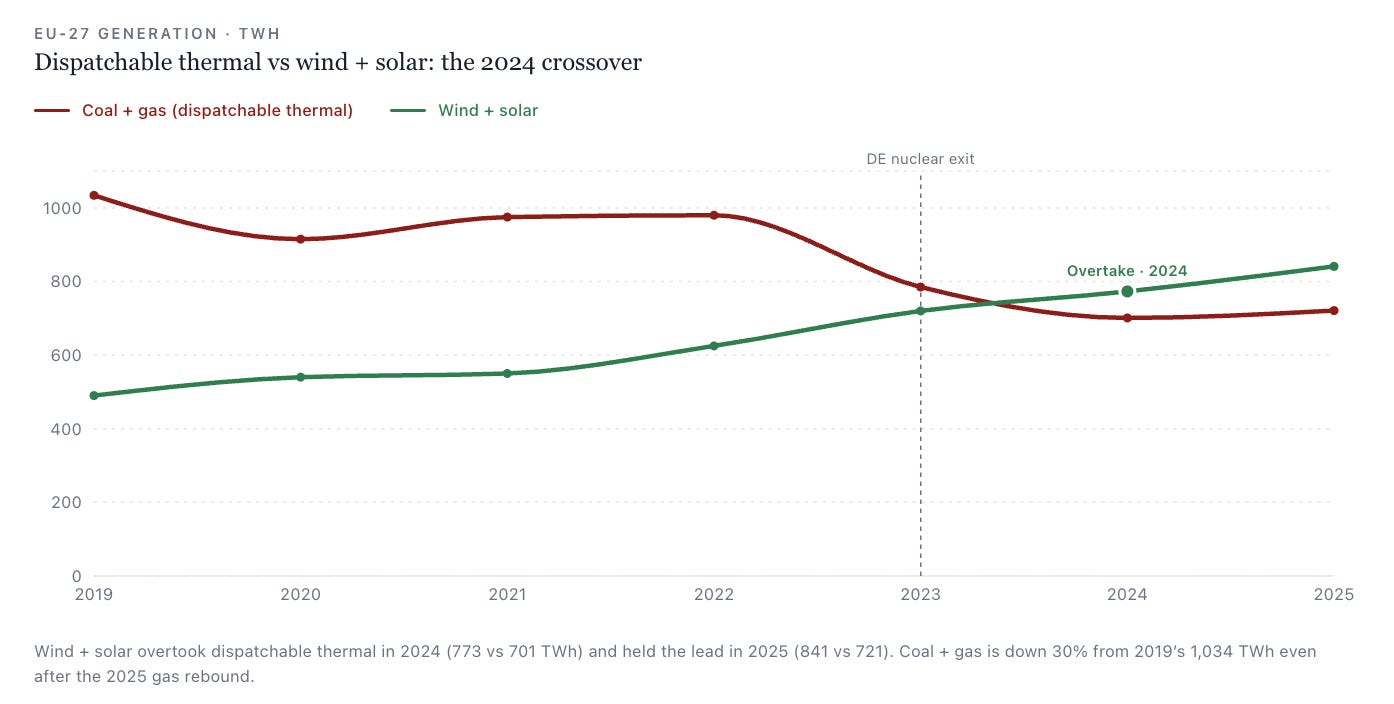
It’s been a steady decline since 2023, with lower storage, reduction in dispatchable baseload (nuclear & coal retirements) and expansion of renewables, which increase system fragility, especially in the winter (Solar can hit 27% of Germany’s available electricity in June (peak summer) and bottoms out at ~3% in January/peak winter).
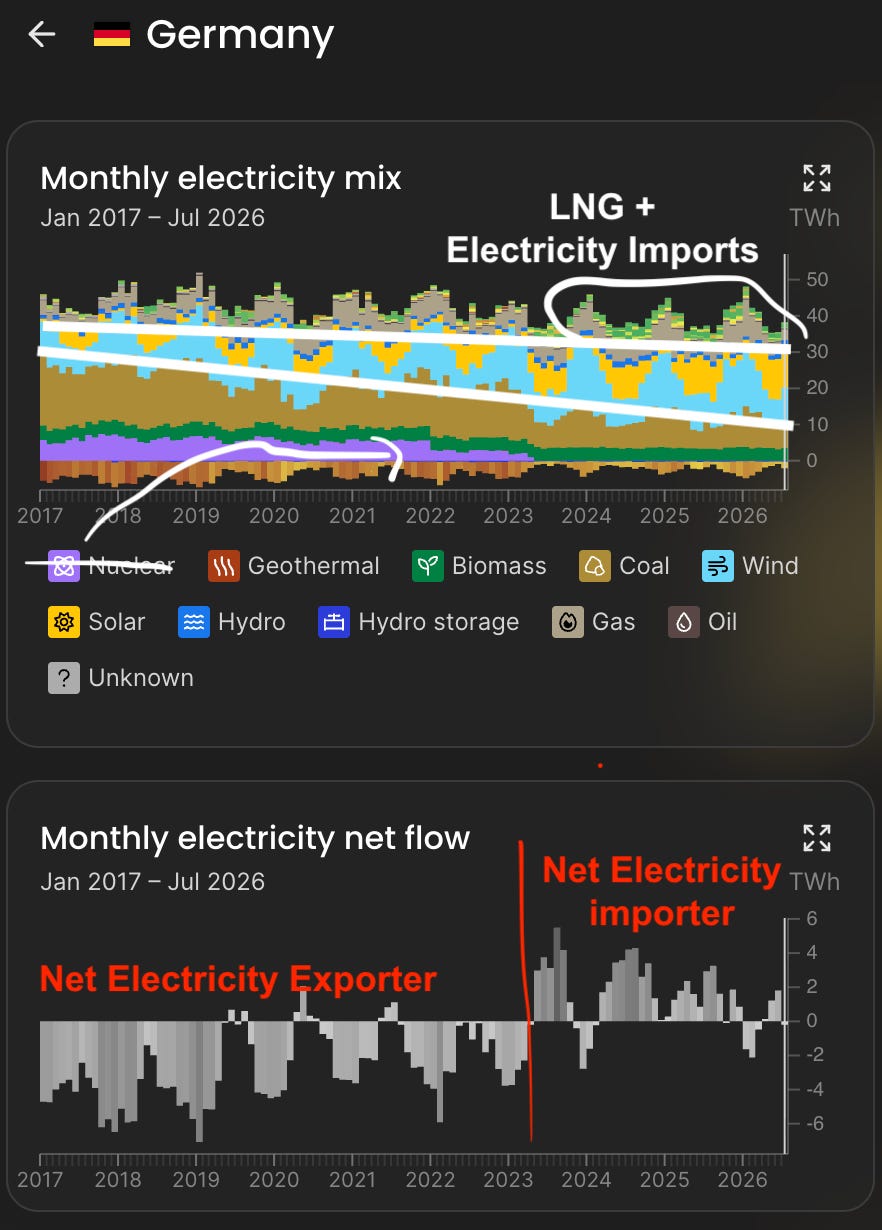
This “solar hole” must be met with a combination of LNG and electricity imports (pre-2023 Germany was a net electricity exporter). Wind represents a third of their winter electricity available, with the caveat that it can disappear entirely for periods, i.e. “Dunkelflaute”
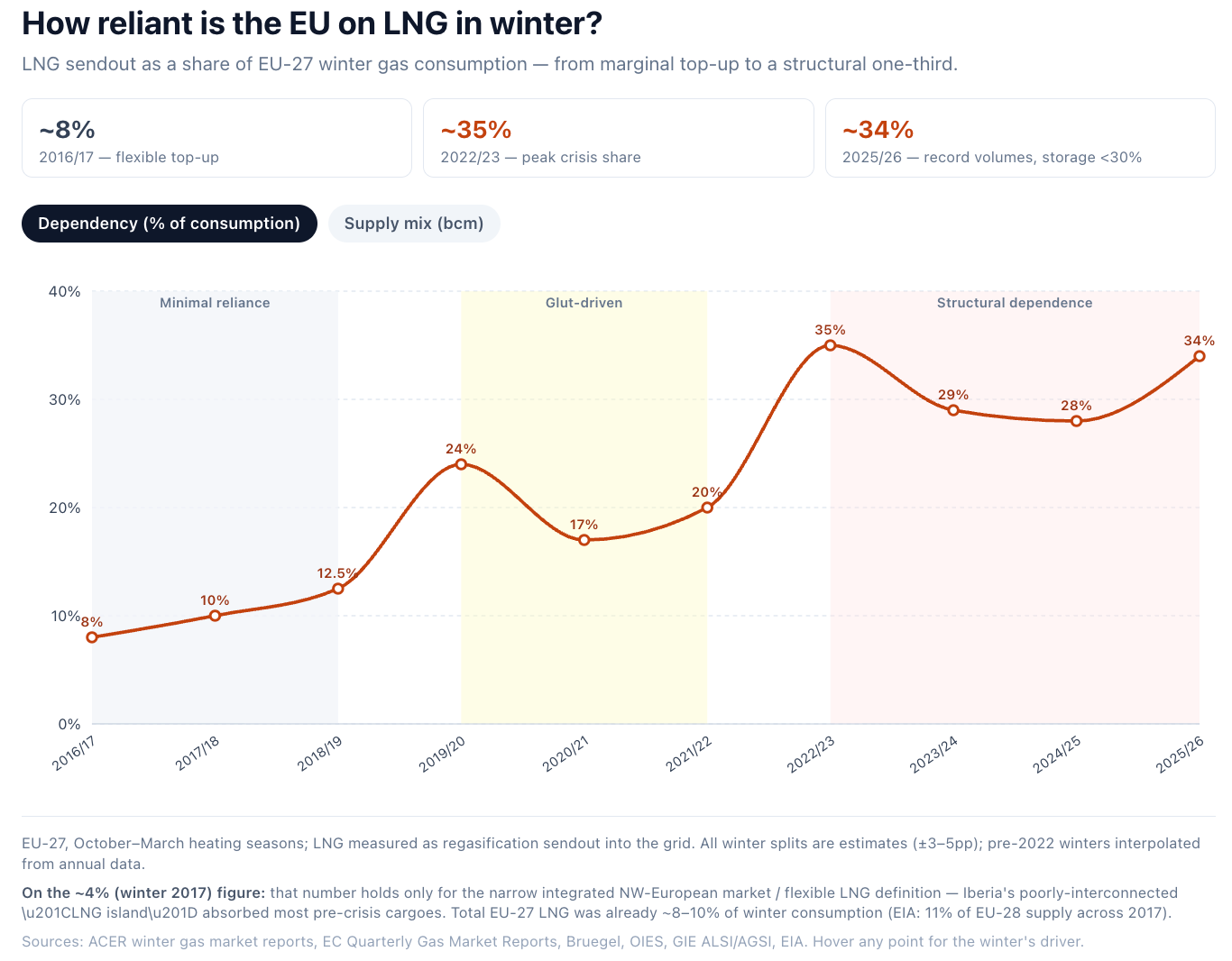
In December/January, winter gas consumption can be double real-time supply, which is why storage is essential.
Qatar isn’t coming to the rescue
QatarEnergy seeks US LNG deals through to 2031, sources say
Having halted production in March, QatarEnergy has renewed force majeure notices monthly, most recently extending them to November, with further extensions possible as the Strait of Hormuz remains closed, the sources said.
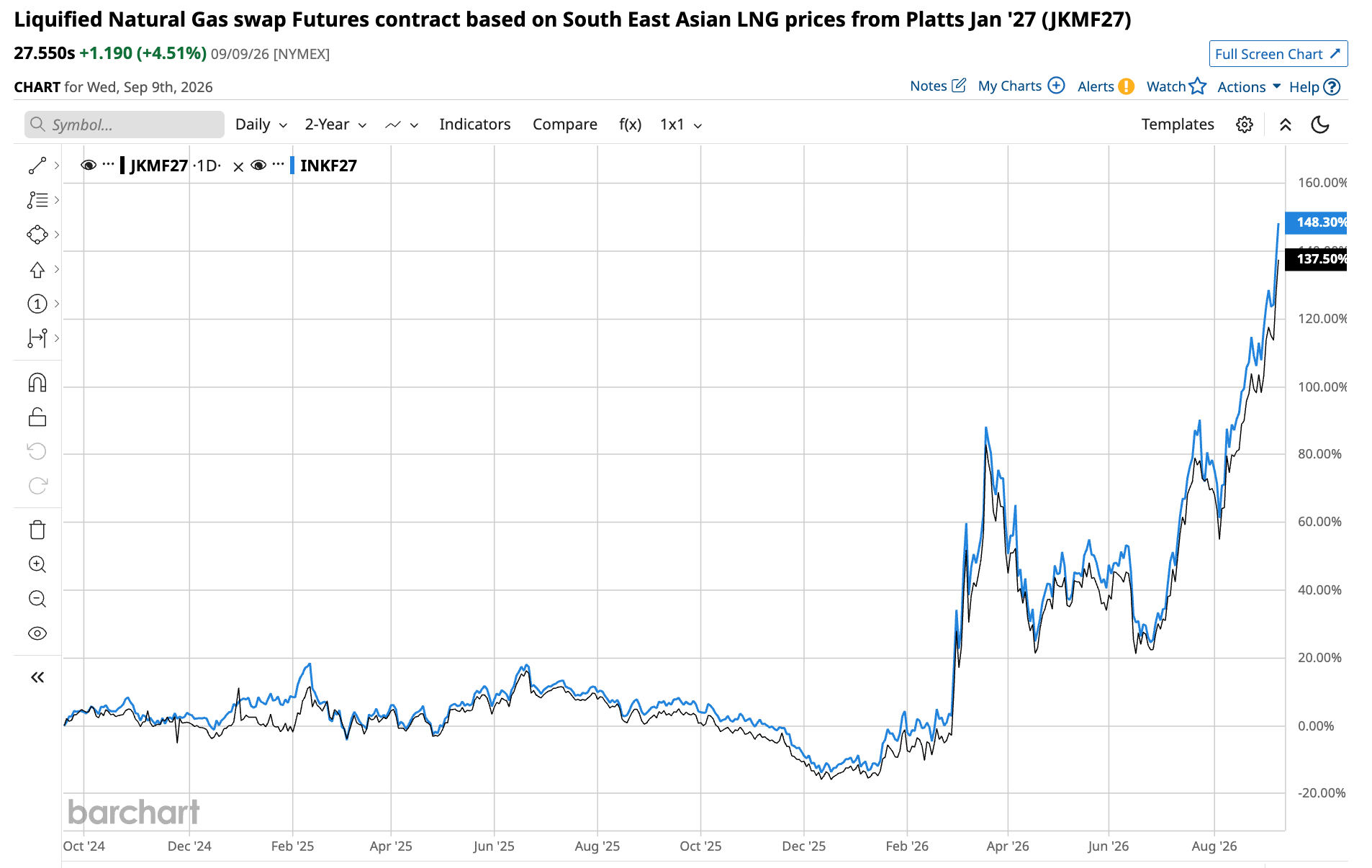
Below are the January JKM/TTF contracts (peak winter), which are now going vertical as it becomes clear the EU will need that LNG to compensate for low storage while Asia isn’t letting up either since they lost those fixed Qatar contracts (remembering the earlier point: EU December/January winter consumption can be double real-time supply).
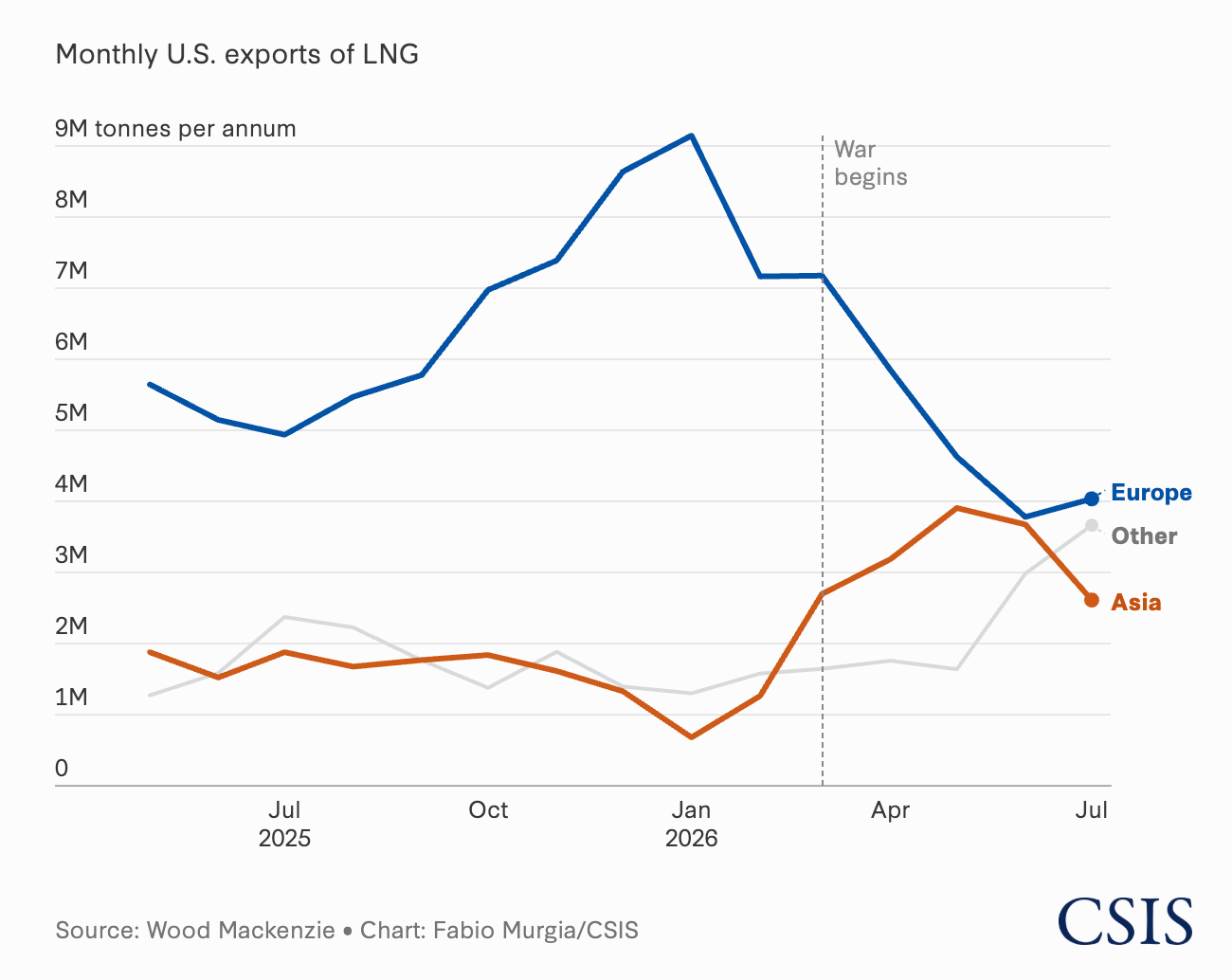
The below title might as well read, EU plans to price out Asian buyers.

The Big question: Will the Super El Niño bail out the EU?
Rystad: Can a ‘super’ El Niño bail out Europe’s gas market this winter?
Only an exceptionally strong El Niño will meaningfully ease Europe’s LNG needs this winter, and forecasters currently rate that outcome as a long shot.
A mild winter isn’t enough; it needs to be significantly warmer than past mild winters, and it also needs to avoid potential El Niño side effects like wind droughts and late-winter cold snaps.
A strong El Niño is now a high probability, if not certain, feature of the coming winter, and it should exert some downward pressure on European gas demand. But the market-moving scenario, a full 2-degree Celsius warming across the winter months, has occurred only twice in the historical record. Rystad Energy’s base case is currently considering a more moderate warming effect, one that reduces the size of Europe’s import increase without eliminating it. Should forecasts continue trending toward the higher end of the strength range as winter approaches, as they did in the build-up to the 2023-2024 event, that calculus could shift further. Market participants should treat the moderate scenario as the working assumption, while watching forecast revisions that could tilt outcomes toward the more bearish extreme.
Structurally Lower Gas Demand?
The best work I’ve come across on this is Alexander Stahel’s work: EU Natural Gas Deep Dive: Cheap Gas, Fragile System.
Have European households permanently reduced gas consumption following the loss of Russian supply, as frequently claimed by policymakers? Have green policies in North-West Europe structurally altered private heating behaviour?
The short answer is: not meaningfully.
Household gas consumption is overwhelmingly driven by temperature. When temperatures fall, consumption rises — and it rises non-linearly. That relationship remains robust across virtually all European countries, with the partial exception of Scandinavia, where electricity plays a larger role in heating.
What about thermal coal?
Ultimately, the EU will price out Asia, which will be forced to max coal utilisation, driving seaborne thermal coal demand (while the position has worked; it’s been more subdued than I’d figured, granted, we’ll see how the next few months play out). The newcastle chart is a thing of beauty here.
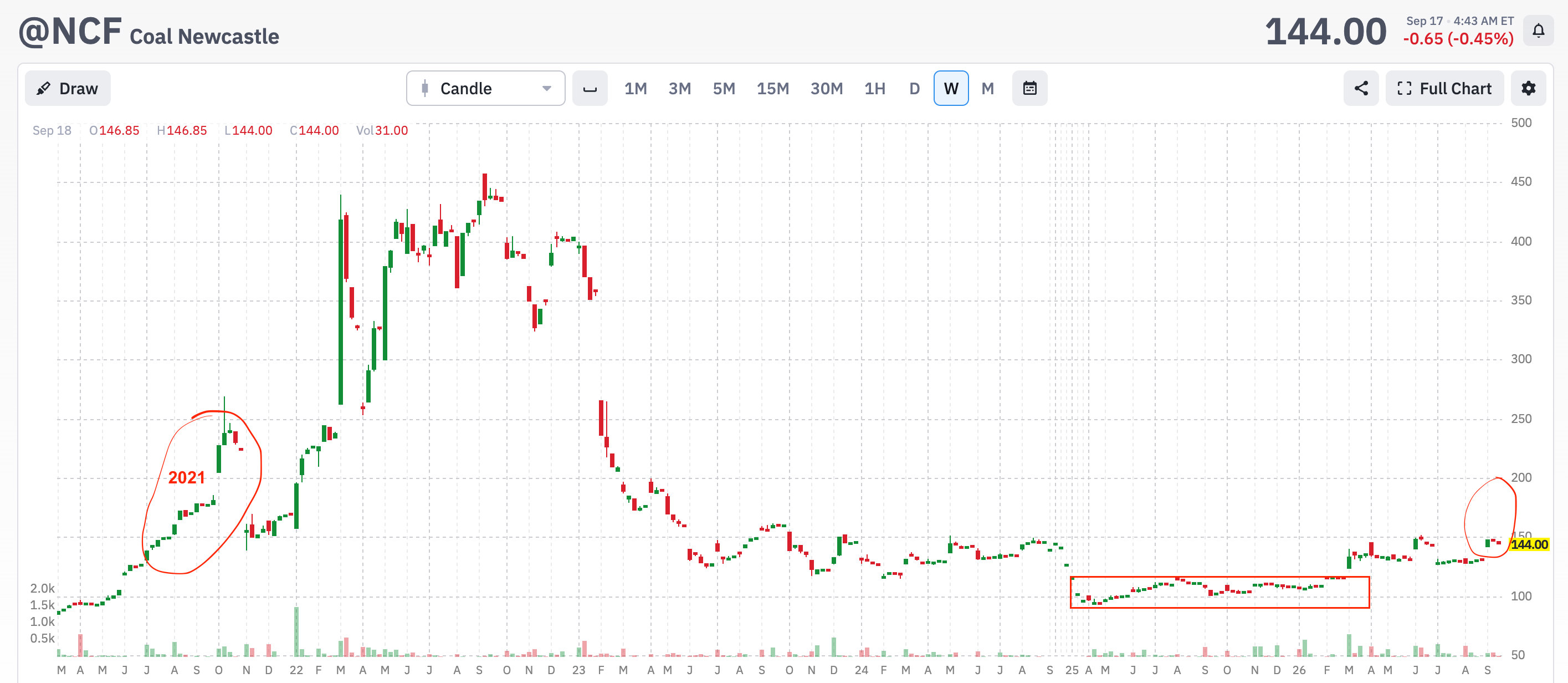
Short-term and longer-term demand are holding up.
While everything I’ve run through might seem short-term focused, I’m a longer-term thermal coal bull (The Big Addition) and see thermal demand growing for years to come: Global Coal Demand Set to Hit Record With Gas Prices Soaring
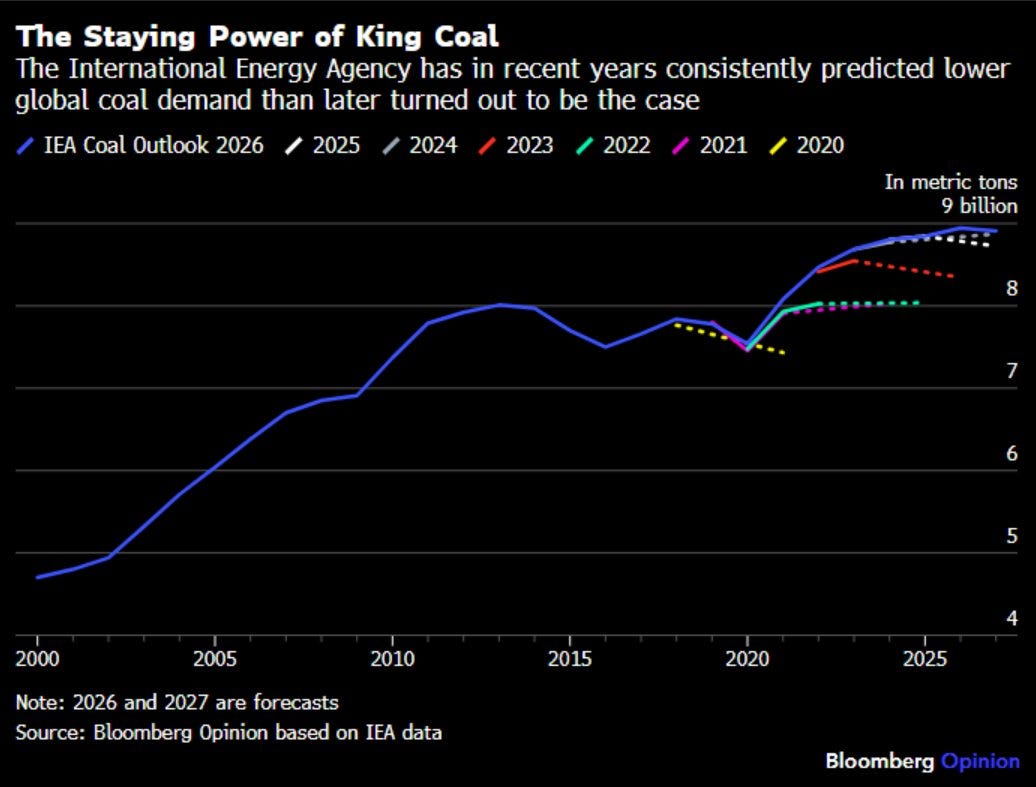
IEA Coal 2020 (forecast demand would “flatten out at around 7.4 billion tonnes” by 2025), undershot 2025 actual demand by roughly 1,440 Mt, a gap bigger than India’s entire annual coal consumption of 1,300 Mt.
Where does Thermal Supply Stand?
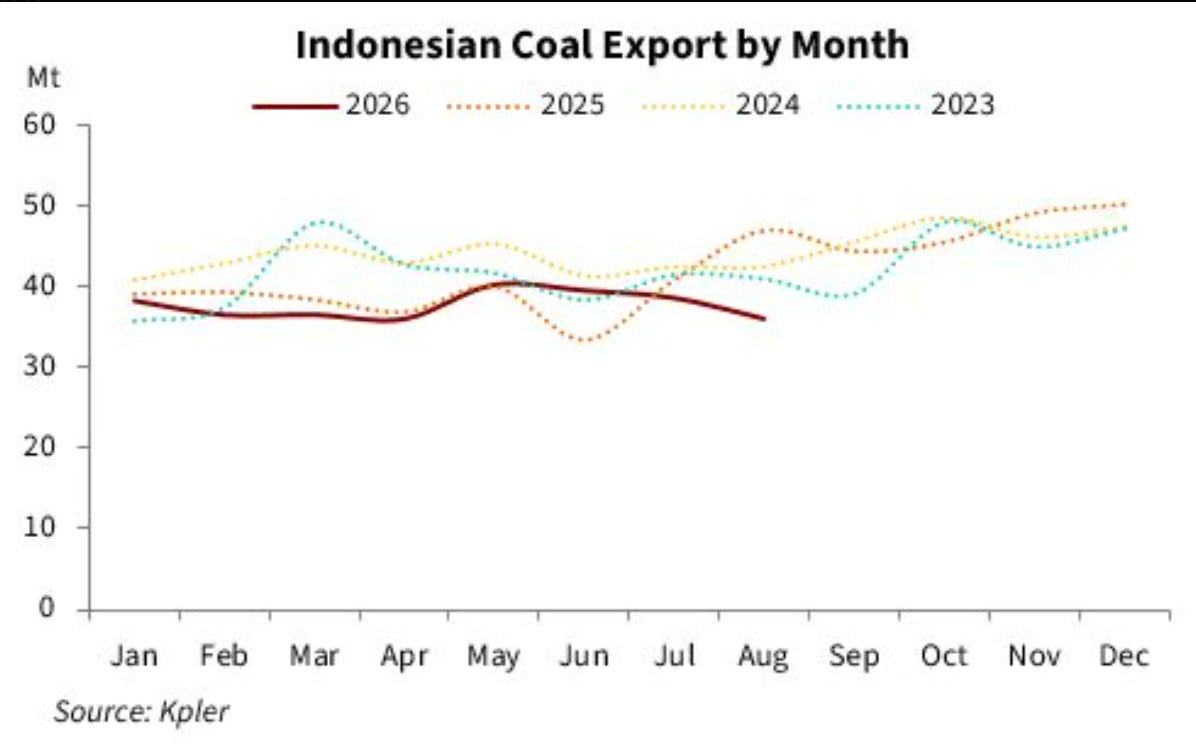
Indonesia (40% of seaborne thermal supply) remains constrained: Indonesia 2026 coal output seen at 720 Mt, down 100 Mt YoY.
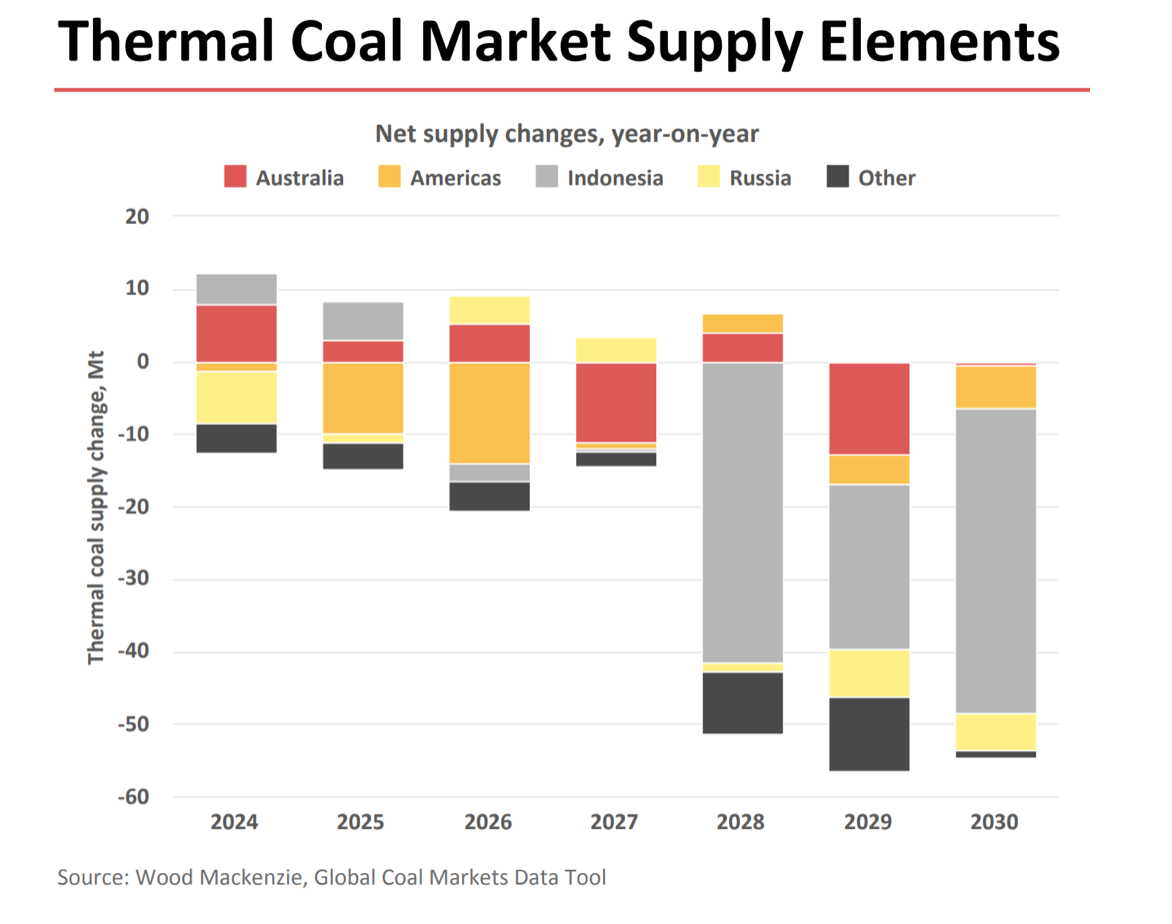
This story really bites from 2028 on.
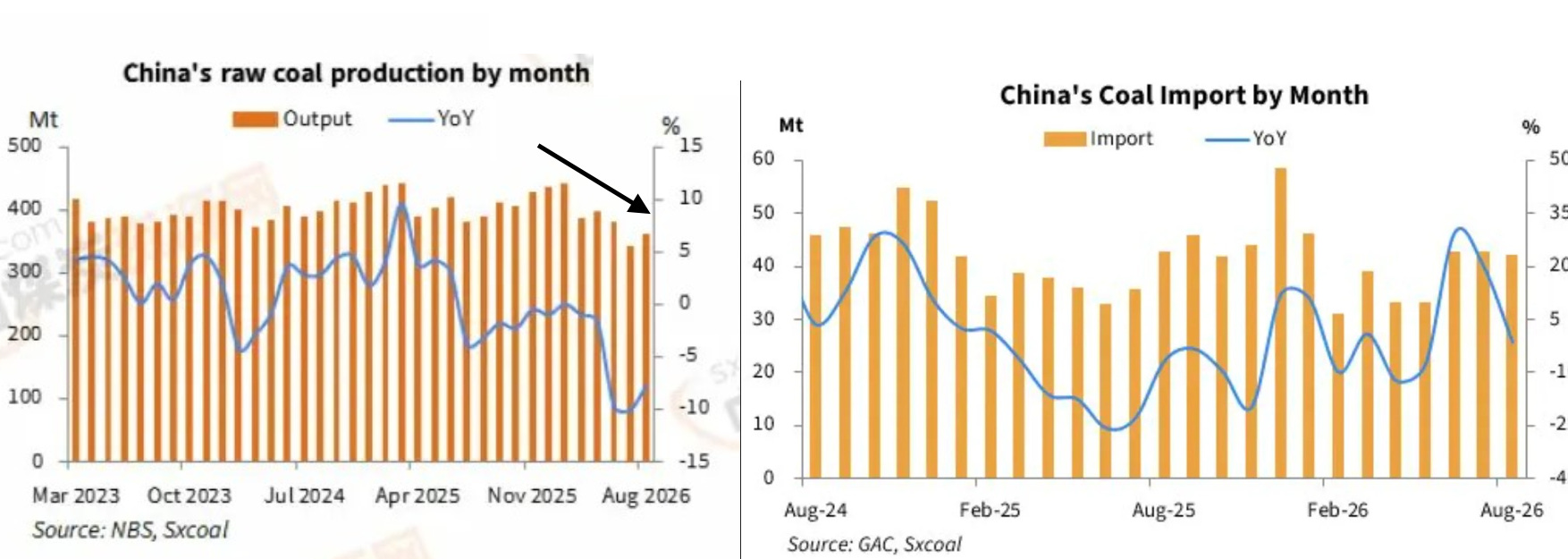
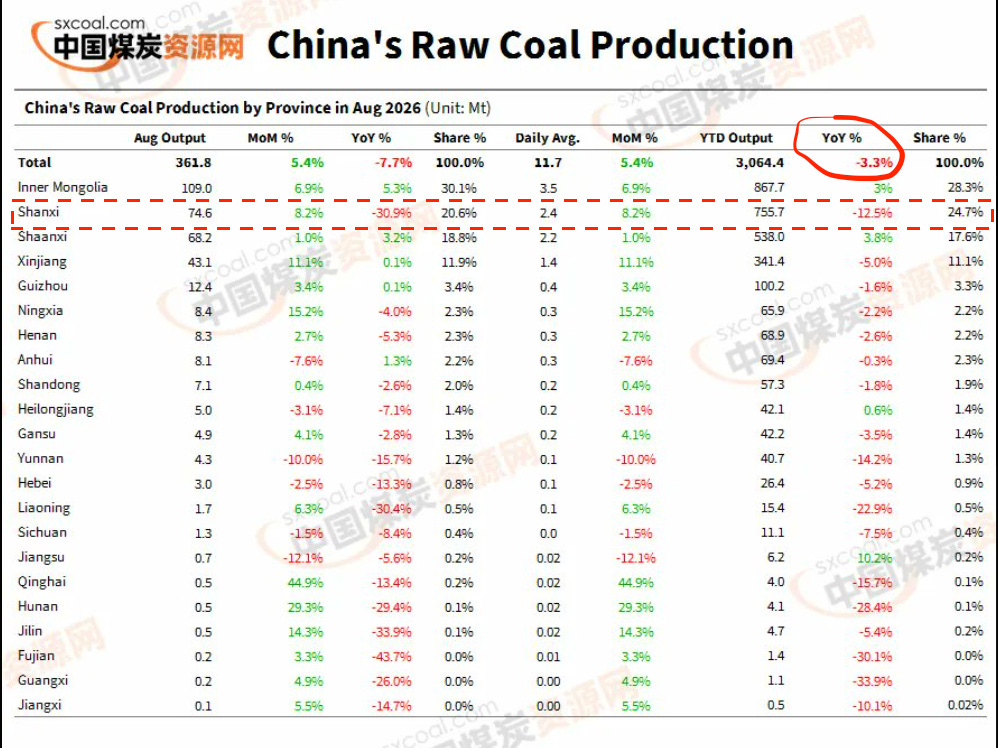
China, the 1,000-pound coal gorilla, is mildly bullish, with coal production declining on the back of the Shanxi accident; imports have picked up.
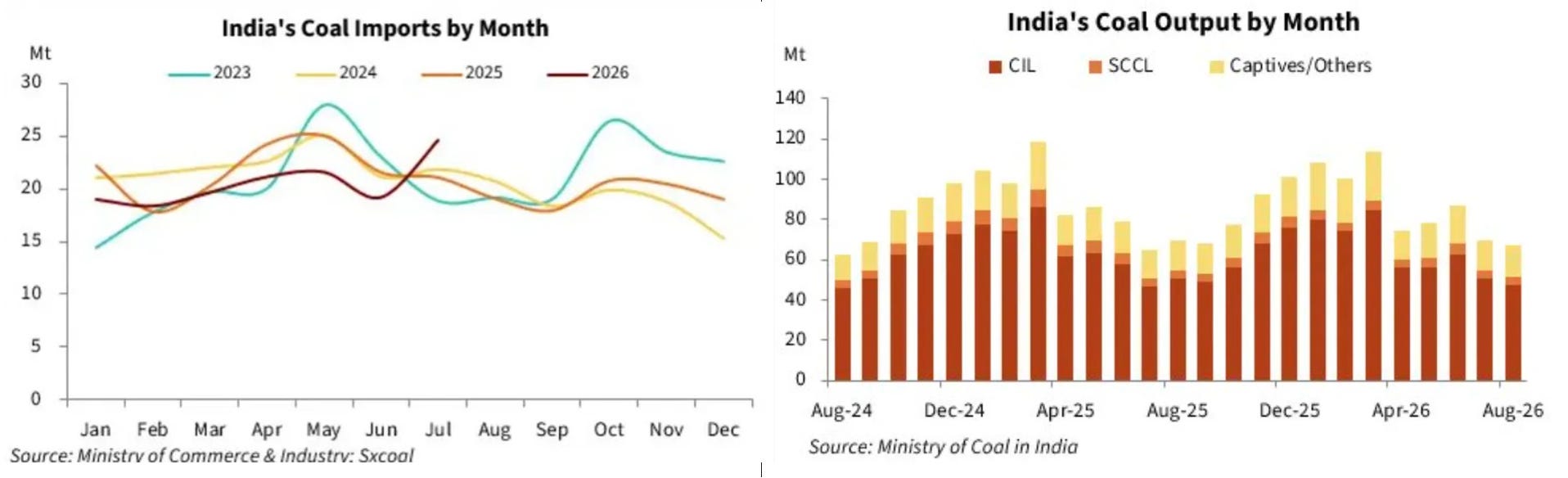
India is similar with domestic output disappointing and imports breaking out.
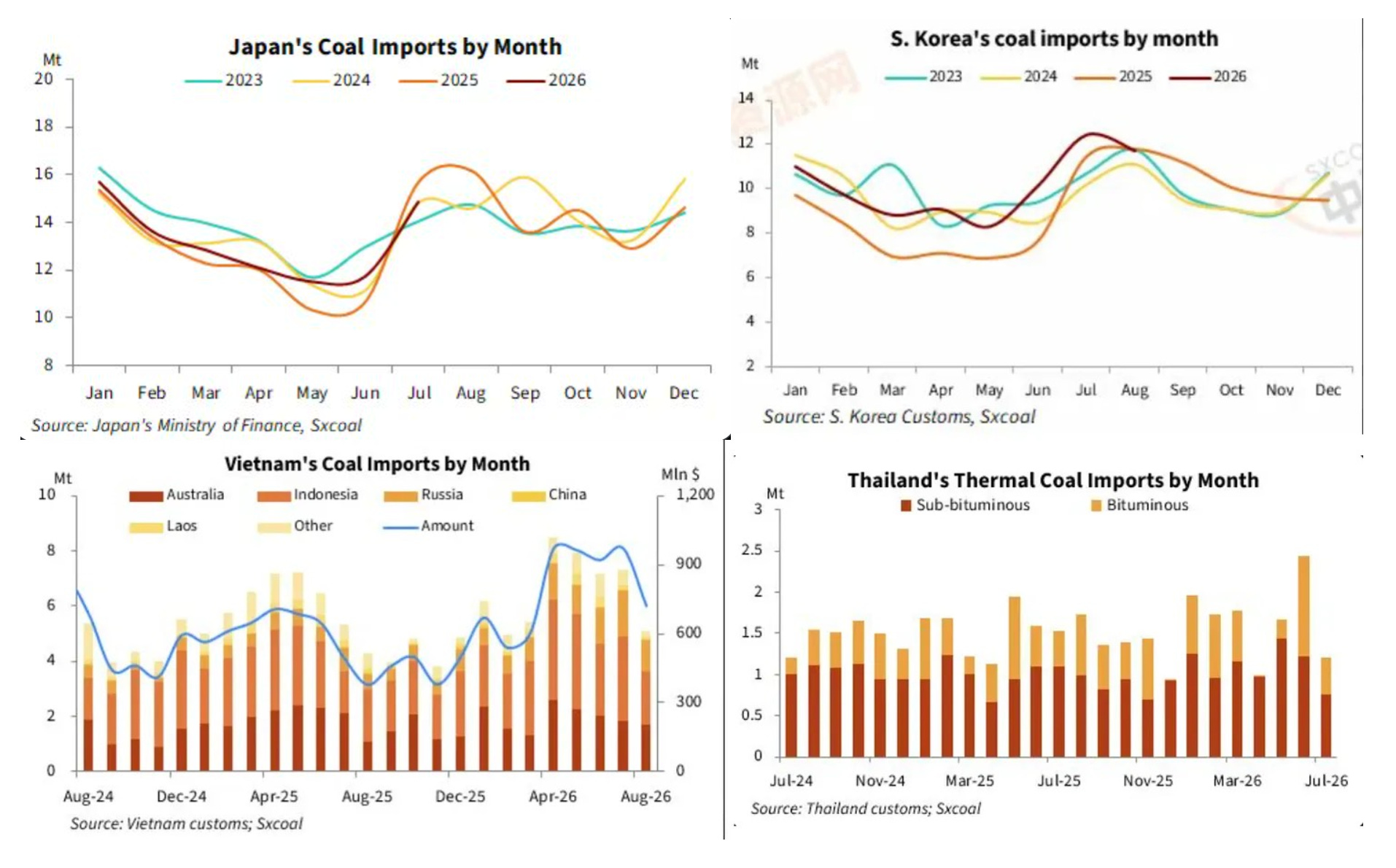
The rest of Asia is maxing out its coal capacity utilisation to offset expensive LNG, with Vietnam even considering building new coal capacity.
How to benefit from all of this?
And avoid this: Germany, Spain, Portugal urge EU windfall tax options