
Ferg’s Finds
This is a short weekly email that covers a few things I’ve found interesting during the week.

Article
The Abundance Illusion - Jeff Currie
When Carter told Americans the energy shortage was a crisis, the admission was honest and politically fatal. His political successors drew the obvious conclusion, and thus the abundance illusion was born: never admit to scarcity. Fear may drive policy, but greed is what gets the votes. And thus the template became reassure markets with words and hundreds of millions of barrels from strategic reserves and hope that talking down prices would bridge the gap until supply returned and the problem quietly resolved itself.
Podcast/Video
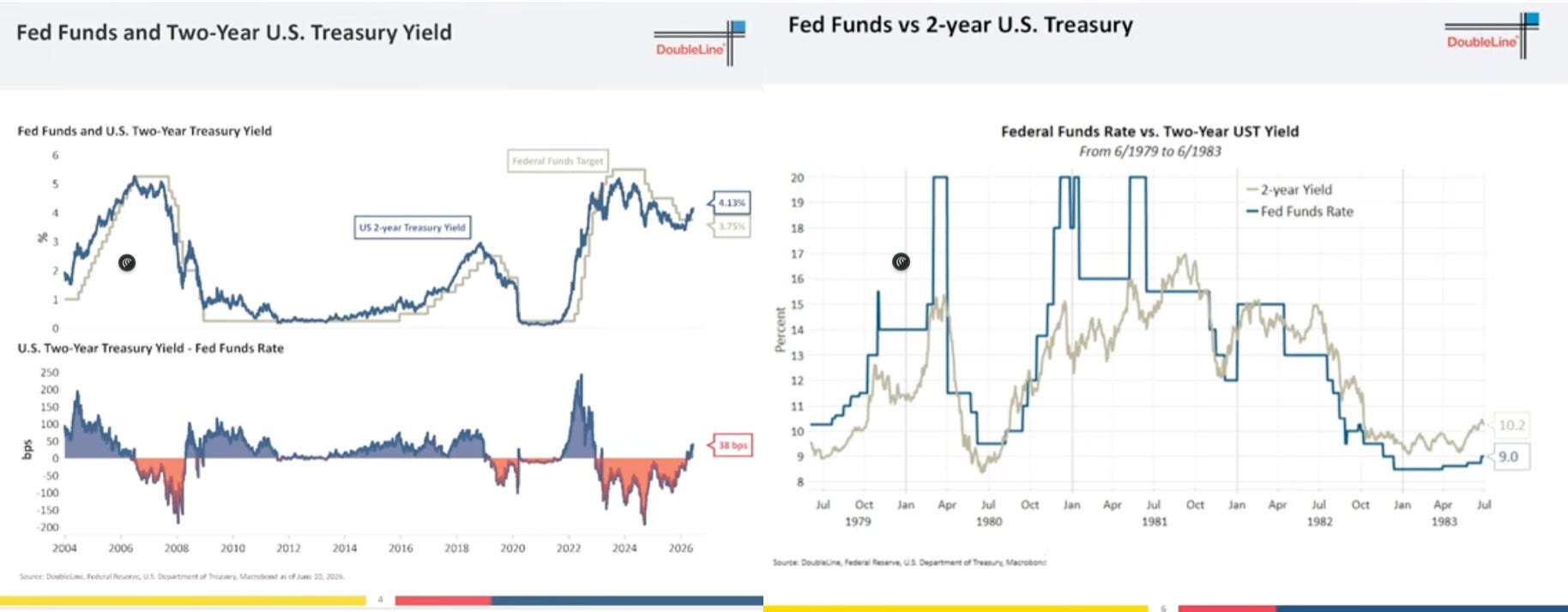
This was a great presentation full of quality charts with Gundlach’s commentary: Gundlach Unlocked: Positioning for Higher Rates and Persistent Inflation
I’ve shared the first chart a few times, but it’s insightful to compare it to the late 70s-80s when policy was proactive compared to today’s reactive policy.
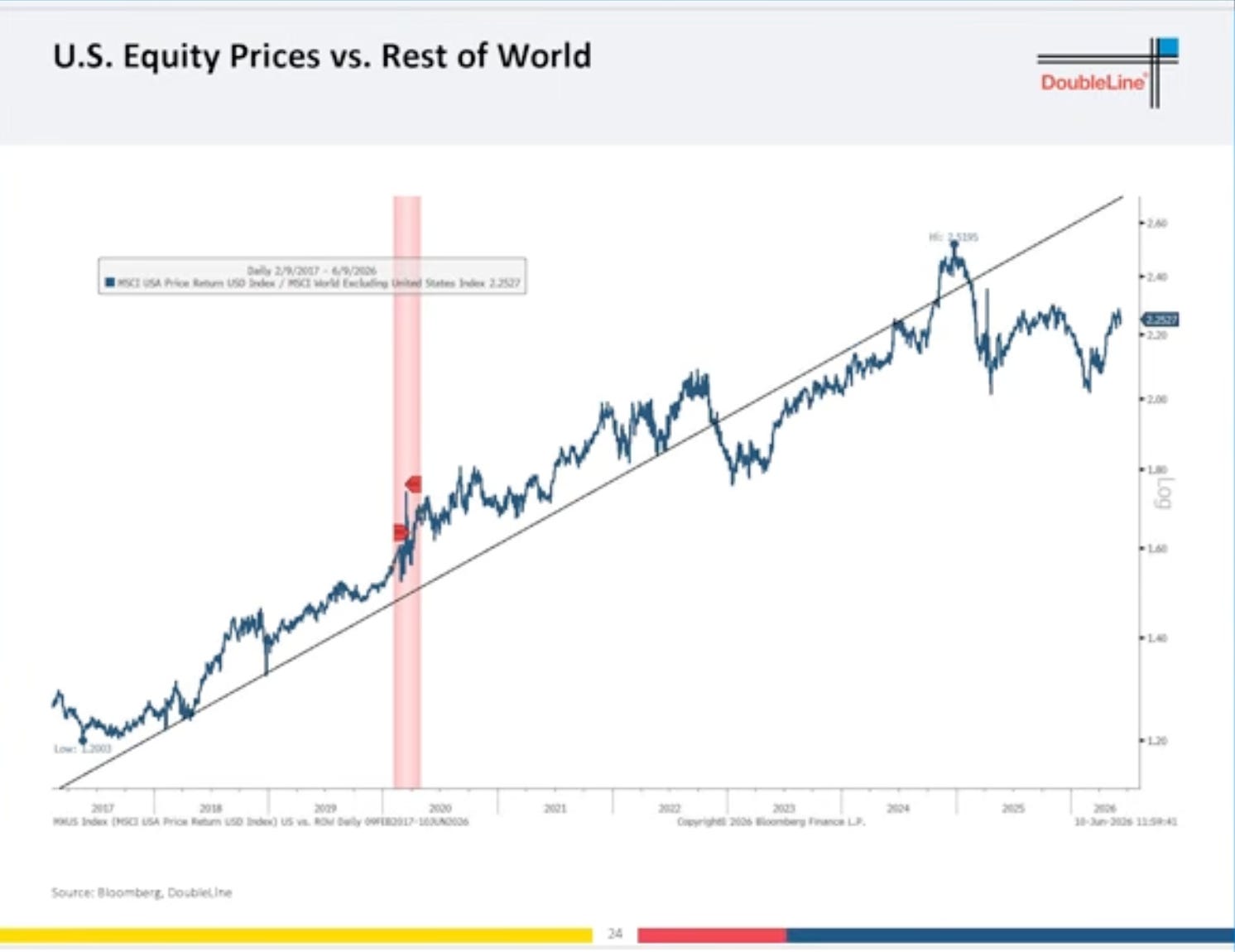
The ‘rest of the world’ continues to outperform despite the craziness in the US market.
Quote
“Own what cannot be printed, programmed, or substituted.”
-Mickey M Maini
I consumed Mickey’s first book on our flight to Spain and highly recommend it.
The Entropy Trap: What Physics Knows that Markets Don’t
The book walks you through six major historical transitions, including ancient empires, monetary breakdowns, and modern financial resets. Observing societies often followed a similar pattern: trust weakens, debt or promises grow, interventions become larger, politics becomes unstable, and eventually the old system reorganises into a new one.
I particularly enjoyed how Mickey examined how the likes of Bernard Baruch and Joseph Kennedy navigated the challenges of their transitions both successfully and unsuccessfully (Bernard Baruch got his gold confiscated).
Tweet

Prof Robert Pape made the same point in his recent piece below:
Uncertain Deal—And Iran Certainly Enters Its Period of Maximum Leverage
The US Strategic Petroleum Reserve began the war with just under 400 million barrels. Today it stands near 348 million. Energy specialists increasingly argue that the operational floor lies closer to 270 to 300 million barrels, the operational minimum after which the salt walls in the storage caverns start to physically collapse. At current draw rates, that leaves only six to eight weeks before Washington faces harder choices.
In other words, time is not neutral. Time itself is becoming a source of Iranian leverage.
For months, the administration successfully reduced immediate pressure by talking down oil prices. Politically, that strategy bought time. Economically, however, it postponed adjustment. High prices normally encourage conservation and substitution. Suppressed prices delay those responses. Delayed adjustments frequently become abrupt adjustments. If inventories continue shrinking, Iran’s leverage will likely be significantly greater in August than it is today.
Charts
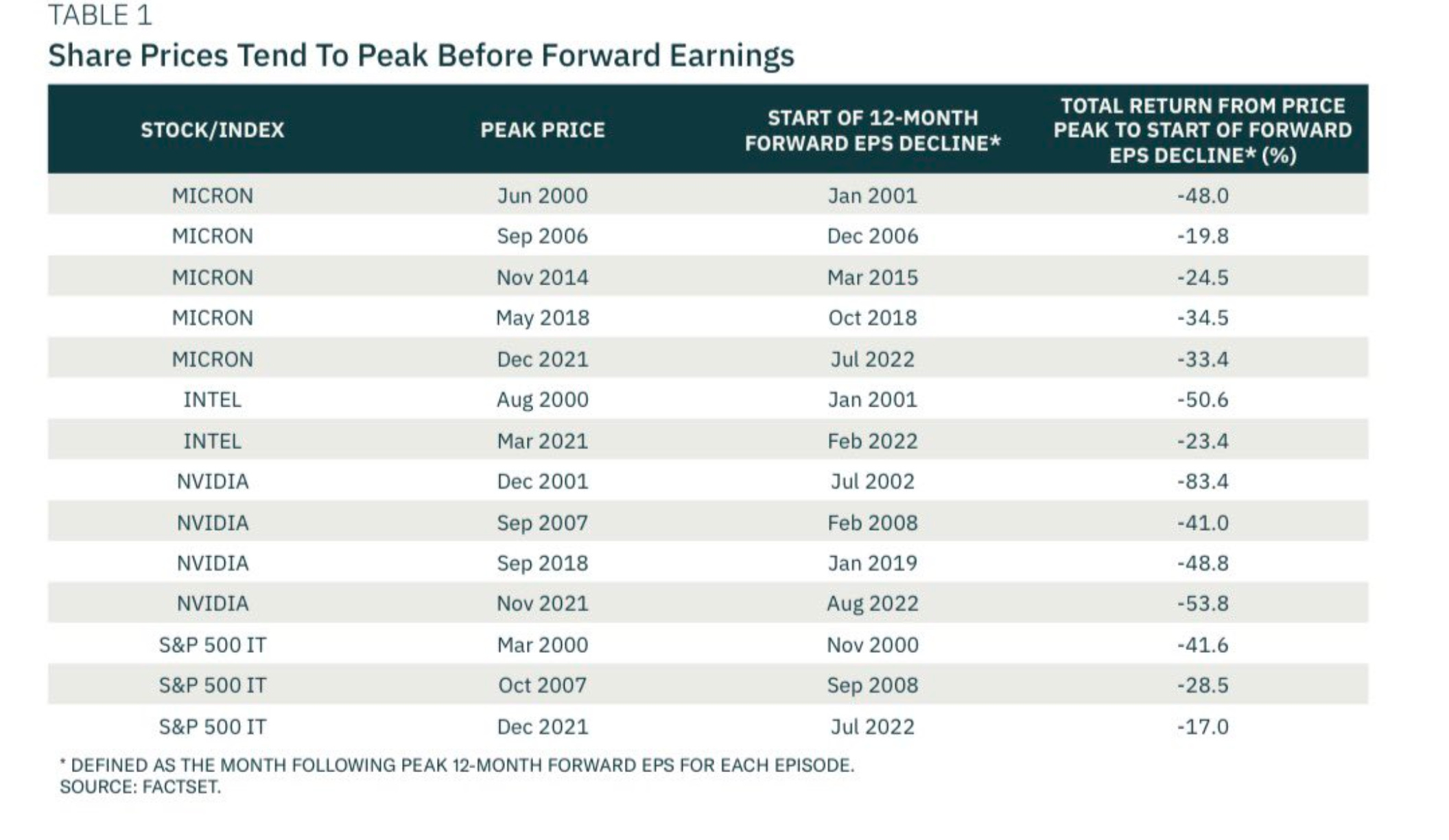
I can’t remember where I came across this chart (please message me if you know where it’s from). Researching the above relationship:
Unsurprisingly, the relationship holds strongly in deeply cyclical, high-multiple sectors (Information technology/semis, materials, and energy).
Lead time and drawdown scale with cyclicality and multiple. Semis showed the longest leads (~10 months) and the deepest drawdowns. Interestingly, materials and energy had short lead times (~4 months) and similarly deep drawdowns.
Something I’m Pondering
I’m pondering Jeff Curries earlier point:
It is quite likely that the West is now going to have to build it under duress, at crisis cost, from a depleted strategic position.
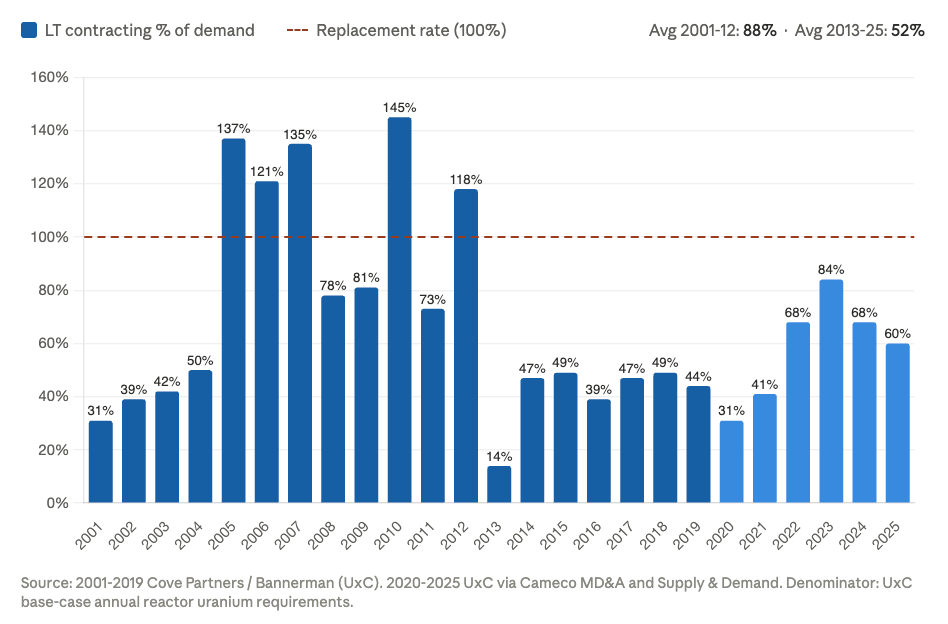
This made me think of uranium.
Western utilities under contract during abundance, then panic and overcontract into scarcity and high prices (we are going to have a few years of 130% replacement rate at some point; there is no substitute after all).
Hope you are all having a great week!
Cheers,
Ferg
P.S. After bouncing around Spain, we have now arrived in Montenegro, where Hugo has been put to work immediately by Mia’s parents. While I’ve been put to work on the rakia bottle…

I’m continuing to pick up positions for his portfolio as I wrote about recently (recent examples being B3SA and Shell after yesterday’s smack).

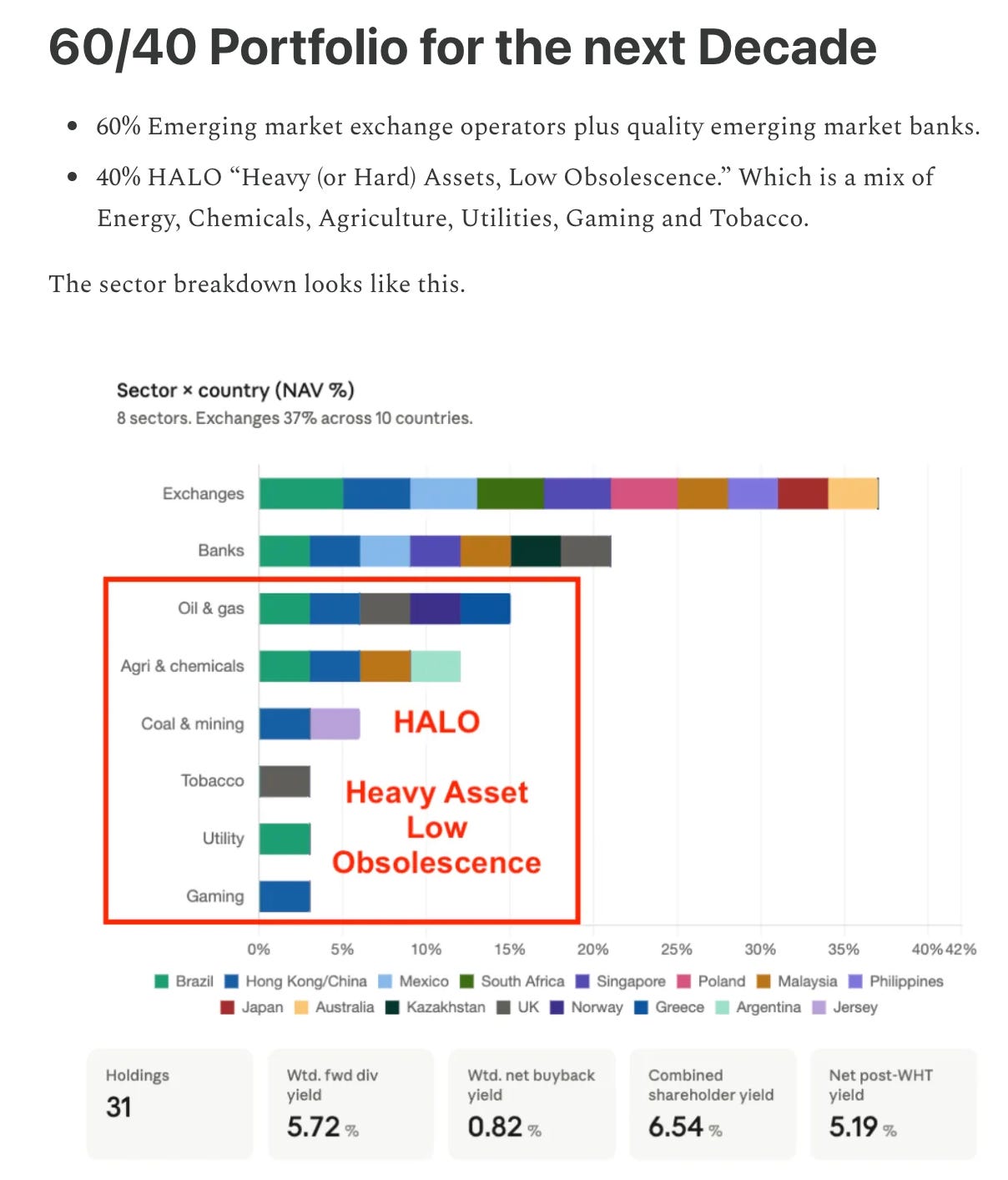
That 10-year 60/40 sounds good to me.
Good book recommendation! Another great article Ferg :)