
Ferg’s Finds
This is a short weekly email that covers things I’ve found interesting during the week.

Article
This piece was excellent!
The Second Derivative: Why No One Understands the AI Boom
The market is pricing AI as a technology cycle when its actual anatomy is that of a credit-driven real estate cycle - which is precisely why the 2008 mechanics apply - and the two break for entirely different reasons.
Technology cycles are driven by innovation and adoption; their risks are obsolescence and competition; they live or die on whether the product is wanted, and they can de-rate slowly as the future is repriced.
Real estate cycles are mechanical: leverage, hard assets, occupancy - debt-financed construction at scale, commercial leases disguised as take-or-pay contracts, and long construction lags that guarantee supply arrives after demand has turned. Walk down the AI build-out and every feature is a property development in disguise: a data center on entitled land, financed with debt against the structure and leased to tenants on take-or-pay terms. This is not a software business that happens to own servers. It is a real estate business that happens to compute.
Real estate cycles break the same way every single time. Not when demand collapses - it rarely does - but when the rate of demand growth decelerates against the fixed supply the boom has just finished building. The second derivative again, in the one asset class where it has been studied for a century.
The hyperscaler has, in economic substance, extended a concentrated infrastructure credit facility to tenants with no independent operating income. If those tenants default, the backlog evaporates into non-cash impairments, leaving the corporate balance sheet to absorb the fixed costs of customized, rapidly depreciating capital assets.
Podcast/Video
Rebuilding Resilience with James Aitken
I started my recent piece with a quote from the interview.
“The way the European Union advances is one dramatic crisis at a time”
Quote
I forget where I first heard it, but someone once said on here, “being able to pass on an investment and then get in after it’s gone up 100% is a superpower”.
-Citrini
Tweet
This Tweet was an eye-opener (the Chinese aren’t just winning on price).
But the real genius isn't even that.
A French guy shows up and says, "Our laws require professional annual inspections for any AC over 2 kg of refrigerant—hundreds of euros a pop." The Chinese vendor flips the manual to the back and points to a line: Refrigerant, 1.99 kg. Just under, no inspection needed.
Then a German chimes in: "We have nighttime noise laws here—anything over 36 decibels is a disturbance, and the cops will fine you." The Chinese vendor cranks the machine to max, shoves a decibel meter right up to the air vent, and it flashes a number: 35.

Charts
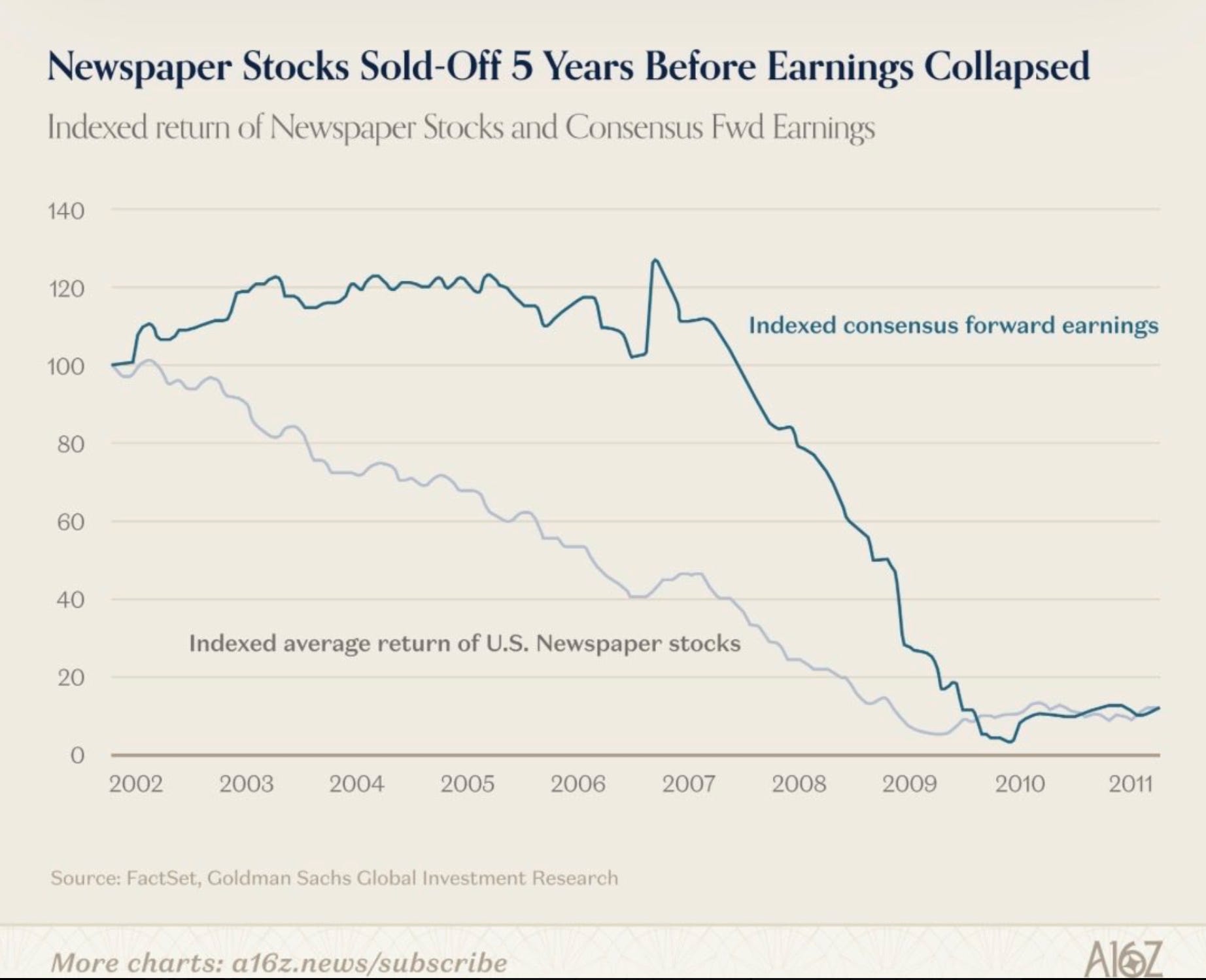
I knew there was often a lag, but 5 years is crazy…
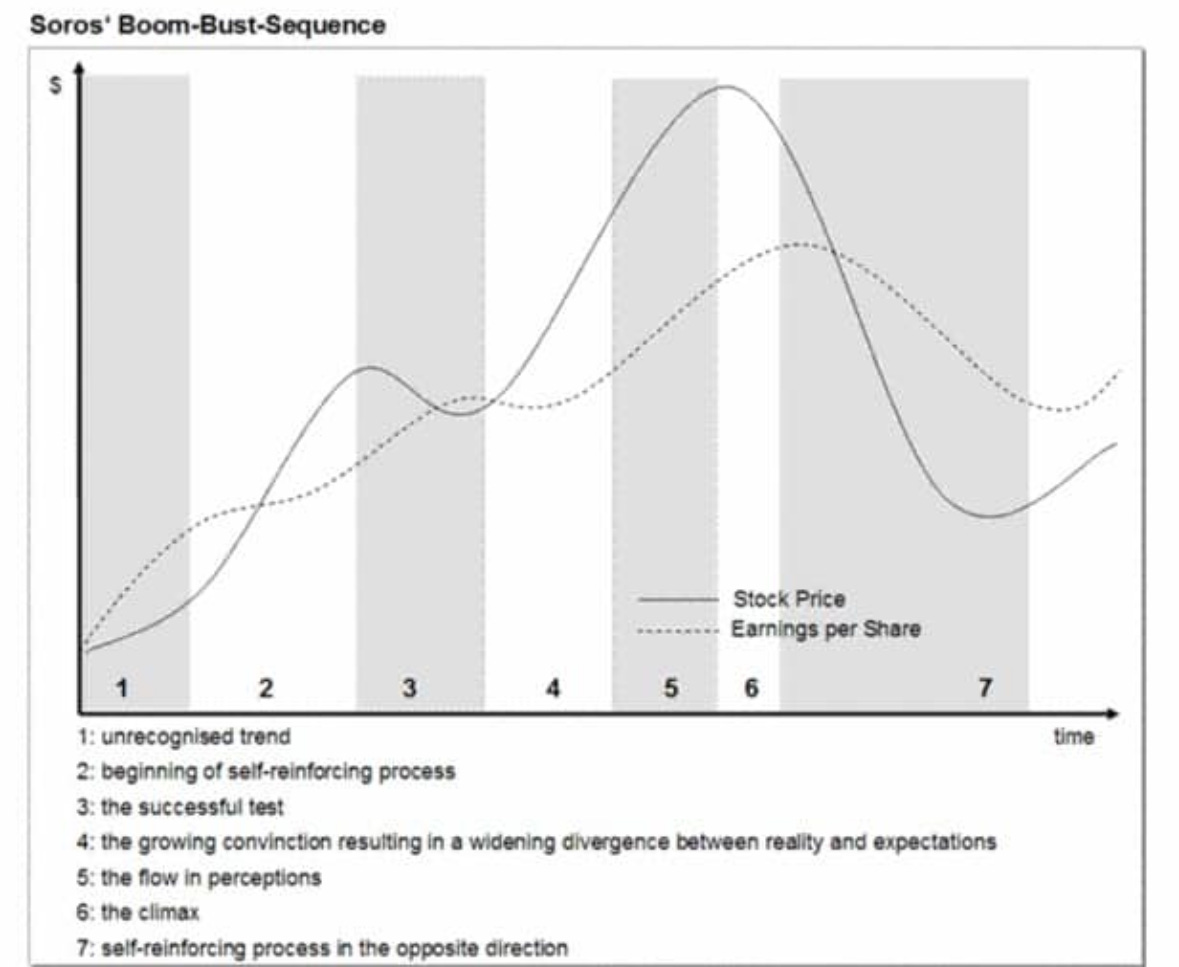
I remember coming across this Soros chart a long time ago.
Something I’m Pondering
When writing my latest piece on Koyfin & AI, I landed back on this brilliant blog: Inversion and The Power of Avoiding Stupidity.
Charlie Munger is famous for his quote “All I want to know is where I’m going to die, so I’ll never go there.” That thinking was inspired by the German mathematician Carl Gustav Jacob Jacobi, famous for some work on elliptic functions that I’ll never understand. Jacobi often solved difficult problems by following a simple strategy: “man muss immer umkehren” (or loosely translated, “invert, always invert.”)
Using that mental model:
“All I want to know is where the big areas of underperformance in the market will likely be longer term, so I’ll never go there.”
My guess at the biggest risk to many companies’ margins and multiples over the next, say, 5 years is:
Chinese competitors attacking margins (Solar, EVs, HVAC, rockets and AI).
AI disruption attacking multiples in tech/capital light businesses’ ability to project cash flows longer term (the higher the multiple, the more backloaded the valuation).
Higher structural inflation: if inflation runs hot, you don’t go straight to Weimar or Zimbabwe…
So, the first casualty of sustained inflation is valuations. Once you get valuations depressed, yes. The effect of inflation on nominal cash flows, overwhelms any further downward pressure on valuations. And, you finally get stocks doing well.
-John Hussman
Hope you all have a great weekend!
Cheers,
Ferg
P.S. We have been up in Zabljak in Montenegro (reminds me a lot of Queenstown in New Zealand).
Below that was my gift from Mia’s cousins, which translates to: ‘When the internet goes down, open it and reset yourself’ (first reset wasn’t successful; all I got was a cracking headache…)

Unlike property real estate, hyperscalers need to renovate every 3-5 years!!!
Haha love that last paragraph 🤣